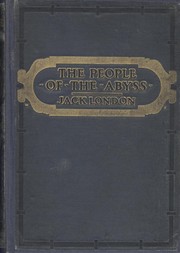
Books Like The People of the Abyss
by Jack London
The People of the Abyss is a sustained piece of immersion reportage: Jack London lived and worked in London's East End in 1902, moving among the poorest residents to record their daily existence in plain, unsentimental prose. The book combines close observational detail — squalid lodging-houses, casual labor markets, disease and hunger — with moral urgency; London frames scenes to show systemic cruelty rather than individual failure. Its voice is simultaneously participant, witness and social critic.
If you responded to The People of the Abyss because you wanted a firsthand, morally driven account of urban misery, look for books that replicate London’s method (participant-observer journalism) and aim (structural critique intended to prompt reform). If it was London’s raw, scene-by-scene human detail that mattered, you’ll prefer photo‑ethnography or immersive undercover reporting. If it was the sweep — connecting poverty to policy and history — choose something that pairs reporting with explicit political analysis. Below are nine picks sorted by how closely they echo those specific qualities.
Recommended for fans of The People of the Abyss
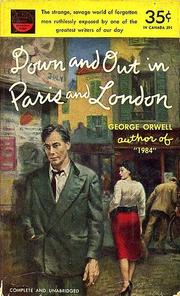
Down and Out in Paris and London
George Orwell
First‑person immersion in urban poverty and social critique.
Pick this if you wanted the same participant‑observer stance and moral indignation. Orwell walks among the poor as London does, giving detailed daily-life scenes and an explicit social argument.
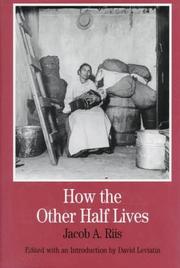
How the Other Half Lives
Jacob Riis
Photojournalistic exposes of tenement squalor and urban reform advocacy.
Pick this if you value photographic proof as much as written description. Riis’s project pairs visual documentation with advocacy for housing reform in a way that complements London’s textual eyewitnessing.
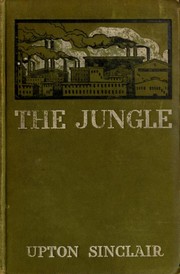
The Jungle
Upton Sinclair
Investigative novel exposing workers' exploitation and filthy urban conditions.
Pick this if you responded to London’s use of narrative to push for systemic change. Sinclair fictionalizes investigative reporting into a novel to drive public outrage about labor and urban conditions.
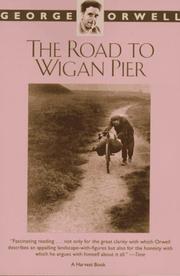
The Road to Wigan Pier
George Orwell
Detailed reportage on working‑class hardship and political reflection.
Pick this if you liked London’s mix of reportage and political reflection. Orwell’s The Road to Wigan Pier offers the same combination, with careful local detail plus explicit argument about class and policy.

The Ragged-Trousered Philanthropists
Robert Tressell
Sympathetic, realist depiction of working‑class life and socialist critique.
Pick this if you want a prolonged, sympathetic look at working-class life that reads like social documentary. Tressell centers workers’ daily realities and socialist critique in realist fiction—very close in moral purpose.
The Condition of the Working Class in England
Friedrich Engels
Foundational analysis of industrial urban poverty and workers' conditions.
Pick this if you appreciated the systemic framing of poverty. Engels offers foundational theory connecting industrial capitalism to urban squalor; expect analysis more than scene-by-scene human portraiture.

Nickel and Dimed
Barbara Ehrenreich
Immersive undercover reporting on low‑wage survival in modern America.
Pick this if you wanted a contemporary analogue of London’s immersion. Ehrenreich’s undercover work recreates the lived experience of surviving on low wages, though it is modern U.S. context rather than Edwardian London.
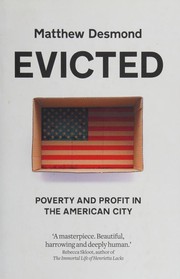
Evicted
Matthew Desmond
Intimate, rigorous study of housing insecurity and urban poverty today.
Pick this if it was London’s focus on housing and its role in poverty that gripped you. Desmond provides a meticulous, evidence-based look at eviction and housing insecurity today — a topical complement rather than a historical match.
Les Misérables
Victor Hugo
Epic, compassionate exploration of poverty, injustice, and social redemption.
Pick this if you liked the compassionate, sweeping view of poverty linked to redemption and justice. Hugo shares the grand moral imagination and concern for the poor, but note this is an epic novel rather than investigative reportage.
At a glance
Matches were chosen on three concrete dimensions: first‑person immersion among the poor, vivid scene-level documentation of daily life, and explicit social critique aimed at reform. Some picks mirror all three; others match only one or two and are labeled accordingly.
| Book | First published | Pages | Closest match on | Match |
|---|---|---|---|---|
Down and Out in Paris and London George Orwell | 1933 | 224 | First‑person immersion | 95% |
How the Other Half Lives Jacob Riis | 1890 | 246 | Photo‑documentary evidence | 92% |
The Jungle Upton Sinclair | 1791 | 350 | Expose-style reform aim | 90% |
The Road to Wigan Pier George Orwell | 1724 | 230 | Reporter-as-witness | 88% |
The Ragged-Trousered Philanthropists Robert Tressell | 1914 | 633 | Working‑class realism & critique | 87% |
The Condition of the Working Class in England Friedrich Engels | 1887 | 298 | Political-economic analysis | 85% |
Nickel and Dimed Barbara Ehrenreich | 2001 | 242 | Modern undercover reporting | 83% |
Evicted Matthew Desmond | 2016 | 448 | Rigorous contemporary case study | 82% |
Les Misérables Victor Hugo | 1862 | 520 | Epic moral scope | 80% |
About The People of the Abyss
Jack London’s The People of the Abyss was first published in 1903 and grew out of his month-long immersion in London’s East End in 1902. Written as investigative journalism rather than fiction, it influenced contemporary debates about urban poverty and is one of London’s best-known nonfiction works.
Frequently asked questions
Is The People of the Abyss nonfiction or fiction?+
It is nonfiction. London presents himself as a participant-observer who lived among East End poor people for weeks and reported what he saw and experienced.
Which books continue London’s investigative approach?+
Down and Out in Paris and London and The Road to Wigan Pier continue London’s first-person, immersive reportage model; How the Other Half Lives and The Condition of the Working Class in England do similar work from photographic and political-analysis angles.
Does this book argue for political solutions?+
Yes. London’s reportage is paired with explicit moral and political commentary; several books listed, like The Ragged-Trousered Philanthropists and The Jungle, take that further with explicit socialist critique or reform-minded exposés.
Should I read more Jack London on similar themes?+
London’s nonfiction pieces and essays on labor and class carry the same urgency; look for his other reportage and essays if you want more of his direct voice and polemic.
More books by Jack London
See all 15 Jack London guides →Want recommendations based on your own favorites?
BookTwin can match you to books by mood, pacing, themes, and emotional payoff — based on 1 to 5 books you tell it you loved.
Try BookTwin