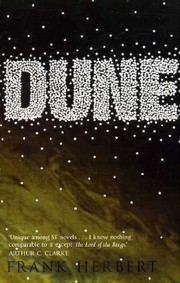
Books Like Dune
by Frank Herbert
Dune is built around converging systems: ecology as politics, messianic mythmaking, and a central family caught between galactic dynasties. Its narrative alternates intimate scenes — Paul Atreides learning desert survival, private councils plotting coups — with sweeping set pieces: spice economics, ritual combat, and the slow, patient maneuvering of houses and religious orders. The novel asks how environment, belief and power co-create one another, and it stages those questions on a fully imagined planet whose ecology is itself a character.
Readers come away from Dune for very different reasons. Some want the dense worldbuilding and ecological logic that make Arrakis feel like a functioning biosphere; others are after the grand political chessboard and multi-generational stakes. Many return to its mythic and philosophical edges — prophecy, ecology, the costs of charismatic leadership — while others simply savor the novel’s alternation between intimate mentor scenes and empire-scale consequences. The nine books below are selected to match those distinct pleasures, not just the label “science fiction.”
Recommended for fans of Dune
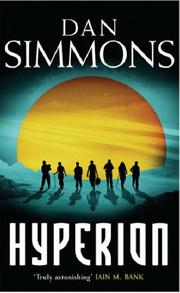
Hyperion
Dan Simmons
Layered, sprawling SF with pilgrimage structure, mystery, and grand themes.
Pick this if you want a multi-voice, multi-layered SF epic that combines pilgrimage-style storytelling with grand themes of religion and time; Hyperion matches Dune’s thematic ambition and structural complexity.

Foundation
Isaac Asimov
Grand-scale political and historical sweep across centuries and galaxies.
Pick this if it was Dune’s scope — civilizations rising and falling over centuries — that gripped you. Foundation offers that macro-historical sweep and institutional plotting in a purer, more schematic form.
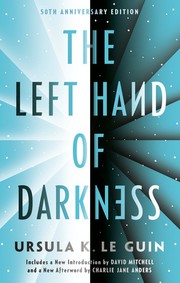
The Left Hand of Darkness
Ursula K. Le Guin
Anthropological worldbuilding and deep exploration of culture and politics.
Pick this if you loved the cultural and political anthropology that makes Arrakis feel lived-in. The Left Hand of Darkness shares that attention to a single society’s customs and how they reshape outsiders’ politics.
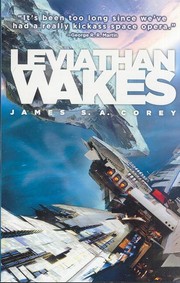
Leviathan Wakes
James S. A. Corey
Political tension, large-cast characters, and gritty interplanetary intrigue.
Pick this if you want contemporary, character-driven space opera with political tension and a large cast. Leviathan Wakes provides messy alliances and believable interplanetary intrigue, closer in tone than in mythic scale.

The Forever War
Joe Haldeman
Hard SF with military, societal change, and personal cost themes.
Pick this if the military, time-shifting consequences and the personal cost of long campaigns were what stayed with you. The Forever War examines soldiers’ alienation and societal change over prolonged conflict in a way that complements Dune’s themes.

A Canticle for Leibowitz
Walter M. Miller Jr.
Religious institutions, cyclical history, and philosophical depth over ages.
Pick this if you were most interested in how religion and institutional memory shape civilizations. A Canticle for Leibowitz tracks faith and cyclical history across ages and asks similar philosophical questions about preservation and power.
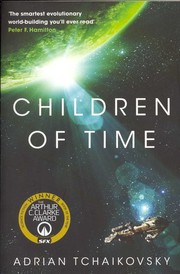
Children of Time
Adrian Tchaikovsky
Ambitious ecology-driven evolution and civilization-scale storytelling.
Pick this if it was Dune’s ecological logic and how environments produce unexpected societies that appealed to you. Children of Time pursues that idea through long-term evolution and emergent civilizations — an ecology-first speculative experiment.

Ringworld
Larry Niven
Bold megastructure worldbuilding and sense of awe and exploration.
Pick this if you wanted a single bold world-concept that generates awe and technical curiosity. Ringworld supplies a grand, engineered setting and exploratory impulse — a sense-of-wonder cousin to Dune’s planetary singularity.
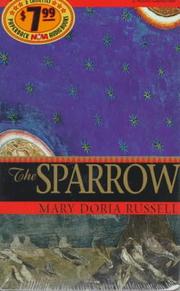
The Sparrow
Mary Doria Russell
First-contact, religion, and moral ambiguity with emotional intensity.
Pick this if the collision of faith, first-contact ethics and moral ambiguity is your main interest. The Sparrow approaches those issues through an emotionally fraught mission and the devastating ethical fallout that follows.
At a glance
Matches were chosen on three axes that define Dune here: ecology-driven worldbuilding, sweeping political and historical scope, and the novel’s philosophical/religious interrogation of leadership and fate. Each pick emphasizes one or two of those dimensions.
| Book | First published | Pages | Closest match on | Match |
|---|---|---|---|---|
Hyperion Dan Simmons | 1989 | 481 | Sprawling, layered epic | 94% |
Foundation Isaac Asimov | 1951 | 240 | Civilizational sweep | 92% |
The Left Hand of Darkness Ursula K. Le Guin | 1969 | 304 | Anthropological worldbuilding | 88% |
Leviathan Wakes James S. A. Corey | 2009 | 592 | Gritty interplanetary politics | 84% |
The Forever War Joe Haldeman | 1974 | 272 | Military & societal impact | 82% |
A Canticle for Leibowitz Walter M. Miller Jr. | 1959 | 320 | Religious institutions & history | 80% |
Children of Time Adrian Tchaikovsky | 2015 | 616 | Evolutionary civilization-building | 78% |
Ringworld Larry Niven | 1970 | 336 | Sense of cosmic wonder | 76% |
The Sparrow Mary Doria Russell | 1996 | 428 | Moral ambiguity & faith | 74% |
About Dune
Dune was first published in 1965 and won the Hugo Award; it launched Frank Herbert’s multi-volume examination of ecology, religion and power centered on the Atreides. Herbert followed it with sequels that expand Arrakis’s theology and politics, making Dune the opening act of a long, cyclical saga.
Frequently asked questions
If I liked the ecology and politics of Dune, what should I read next?+
Try Children of Time for another civilization-scale, ecology-driven premise where evolutionary processes shape culture and politics. For a focus on religious institutions and cyclical history, A Canticle for Leibowitz presents those themes across long historical spans.
Which of these books matches Dune’s grand political sweep?+
Foundation is the closest match for political and historical sweep, tracing institutional rise and fall across centuries and galaxies. Hyperion also offers sprawling stakes but mixes that sweep with a framed-pilgrimage structure and layered mysteries.
Are there books here that capture Dune’s philosophical or religious questions?+
Yes. The Sparrow tackles first-contact and the moral hazards of missionary impulses with emotional intensity, while A Canticle for Leibowitz explicitly tracks religion as an institution shaping post-apocalyptic societies.
Which picks approximate Dune’s military and tactical tensions?+
The Forever War and Leviathan Wakes foreground military conflict and its social consequences: Haldeman’s book emphasizes time-dilation and veteran alienation, while Leviathan Wakes gives a gritty, character-driven account of interplanetary tension.
I loved Herbert’s prose and thematic density — anything by him recommended?+
For more of Herbert’s thematic range, his sequels expand Arrakis’s theology and the long-term consequences of Paul’s rise. Frank Herbert’s other novels similarly blend environment, politics and philosophy if you want to stay with the original voice.
Want recommendations based on your own favorites?
BookTwin can match you to books by mood, pacing, themes, and emotional payoff — based on 1 to 5 books you tell it you loved.
Try BookTwin