
Books Like Round the Moon
by Jules Verne
Round the Moon is Verne’s technical daydream: it takes the barrel-shot concept of From the Earth to the Moon and turns the voyage into an extended laboratory of applied Victorian science. The narrative follows three men launched in an enormous projectile, then chronicles their micro-society in transit, the calculations and contingencies that keep them alive, and the ways Verne squeezes dramatic set pieces out of propulsion, trajectory and the limits of 19th‑century knowledge. The book’s pleasures come from the precise mechanics — orbital arcs, observations of Earth from altitude, improvised solutions when systems falter — all rendered with a genial, often interjected authorial voice.
If you loved Round the Moon, you might have been hooked by different things: the paired‑novel project that turns a single idea into two complementary books; the obsessive, didactic pleasure of thinking through technical odds and margins; or the way speculative science becomes a stage for character and small moral choices. The nine recommendations below are chosen to match those distinct pleasures — direct sequels and other Verne works that replicate the methodical engineering eye, plus contemporaries and successors that either translate the lunar idea into other tonal registers or push the same Victorian speculative energy in new directions.
Recommended for fans of Round the Moon
From the Earth to the Moon
Jules Verne
Direct companion novel, same Victorian scientific adventure and lunar ambition.
Pick this if you want the other half of the story and the full arc of Verne’s barrel-launch conceit; this continues the same characters, technical groundwork and tone.
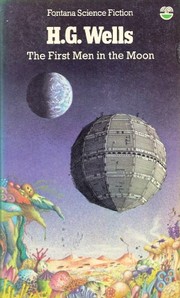
The First Men in the Moon
H. G. Wells
Imaginative Moon voyage with speculative science and imperial-era tone.
Pick this if you want a different Victorian take on lunar travel — more speculative about lunar society and less anchored in mechanical realism than Verne's approach.
20,000 Leagues Under the Seas
Jules Verne
Grand technical wonder and globe-spanning adventure in Verne's energetic style.
Pick this if you enjoyed Verne's exhaustive engineering curiosities and globe‑spanning scientific imagination; this is a longer, sea‑bound analogue that emphasizes technical marvels in a similarly methodical voice.
The Mysterious Island
Jules Verne
Ingenious problem-solving, castaway survival and late-19th-century scientific optimism.
Pick this if it was the book’s ensemble ingenuity and practical improvisation you liked. This one replaces a projectile with an island lab and keeps the same insistence on applied science.

Across the Zodiac
Percy Greg
Early speculative lunar travel with Victorian technicism and romantic wonder.
Pick this if you want more of the era’s earnest speculative machinery and romantic wonder about space — it’s an early, imaginative lunar voyage with the same 19th‑century technicist bent.

A Princess of Mars
Edgar Rice Burroughs
High-adventure planetary exploration and pulpy, thrilling otherworldly action.
Pick this if you want the high‑adventure, pulpier side of planetary exploration. This is more pulpy and action-oriented than Verne — a different tone but similar appetite for otherworldly exploits.

Edison's Conquest of Mars
Garrett P. Serviss
Turn-of-century planetary warfare and improvised rocket science, full of period bravado.
Pick this if you enjoyed the improvisatory, patriotic scientific swagger of Victorian space-fantasies. Expect grandiose period rhetoric and theatrical solutions rather than sober mechanics.

The Moon Pool
A. Merritt
Mystical, eerie subterranean forces tied to lunar mystery and lush prose.
Pick this if you loved the moon as an uncanny setting and want a moodier, more mystical treatment. This is a mood match rather than a technical one — a looser fit for readers after atmosphere over engineering.
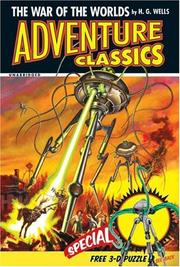
The War of the Worlds
H. G. Wells
Pioneering scientific imagination, Victorian perspective and tense, episodic pacing.
Pick this if you appreciated the era’s riffing on technology and its consequences; this shares the pioneering scientific imagination and episodic, urgent pacing, though applied to terrestrial invasion rather than lunar travel.
At a glance
Matches emphasize three axes: direct plot/character continuation (the sequel relationship), shared Vernean engineering and episodic problem-solving, and the broader Victorian speculative tone. Percentages reflect how many of those axes each recommendation intersects.
| Book | First published | Pages | Closest match on | Match |
|---|---|---|---|---|
From the Earth to the Moon Jules Verne | 1900 | 308 | Direct sequel continuity | 98% |
The First Men in the Moon H. G. Wells | 1900 | 238 | Alternative lunar vision | 92% |
20,000 Leagues Under the Seas Jules Verne | 1998 | 96 | Technical wonder & scope | 90% |
The Mysterious Island Jules Verne | 1895 | 656 | Inventive problem-solving castaways | 88% |
Across the Zodiac Percy Greg | 1974 | 356 | Victorian technicism & wonder | 82% |
A Princess of Mars Edgar Rice Burroughs | 1912 | 176 | Planetary adventure energy | 78% |
Edison's Conquest of Mars Garrett P. Serviss | 1947 | 200 | Period rocket bravado | 75% |
The Moon Pool A. Merritt | 1919 | 286 | Lunar mystery & atmosphere | 72% |
The War of the Worlds H. G. Wells | 1946 | 206 | Victorian scientific imagination | 70% |
About Round the Moon
Originally serialized in French as Autour de la Lune, Round the Moon (the sequel to From the Earth to the Moon) continues Verne's 1865 projectile conceit by following the actual voyage. It belongs to Verne’s “Voyages extraordinaires” cycle and showcases his late‑19th‑century interest in popular science, mechanics and plausible extrapolation rather than mystical speculation.
Frequently asked questions
Do I need to read From the Earth to the Moon first?+
Yes. Round the Moon is the direct continuation of From the Earth to the Moon: it assumes you know the launch plan, the Gun Club characters and the technical setup that sends the projectile aloft.
Is Round the Moon hard to follow because of the science?+
Verne writes for a general readership: the book contains a lot of technical detail, but it’s presented conversationally and usually tied to plot consequences, so readers who enjoy methodical explanation will find it engaging.
Which other Jules Verne novels share this scientific focus?+
20,000 Leagues Under the Seas and The Mysterious Island both foreground Verne’s appetite for technological invention and practical problem-solving, though each uses different settings to do it.
Are there books from the same era that imagine lunar travel differently?+
Yes. From the Earth to the Moon paired with Round the Moon gives Verne’s mechanically grounded lunar vision, while works like The First Men in the Moon treat lunar travel with a different speculative and social imagination.
Is Round the Moon considered influential for later science fiction?+
It is. Verne’s attempt to base adventure on plausible mechanics — rather than simply fantasy — influenced later writers who balanced imaginative leaps with technical reasoning.
More books by Jules Verne
See all 22 Jules Verne guides →Want recommendations based on your own favorites?
BookTwin can match you to books by mood, pacing, themes, and emotional payoff — based on 1 to 5 books you tell it you loved.
Try BookTwin