
Books Like Around the World in Eighty Days
by Jules Verne
Around the World in Eighty Days runs on one of the most elegant engines in adventure fiction: a wager, a deadline, and a map. Phileas Fogg bets his fortune that he can circle the globe in eighty days, then does it the hard way — stitching together steamers, trains, a wind-sled and a famously rented elephant, while a detective who's convinced he's a fleeing bank robber shadows every leg. The pleasure isn't really danger; it's momentum. Each chapter drops Fogg into a new city and a fresh logistical problem, and the clock never stops ticking.
So “books like Around the World in Eighty Days” can mean several different things, and the right pick depends on what actually hooked you. The race against time? The globe-hopping change of scenery? The odd-couple partnership of an unflappable gentleman and his scrambling valet, Passepartout? Or simply Verne's brisk, witty, problem-of-the-week rhythm? The nine books below are ranked by how closely they echo those qualities — from swashbuckling classics that match Fogg's pace, to the true story of two women who actually raced around the world to beat his record. Each pick spells out what it shares with Verne and where it goes its own way, so you can choose by the thing you loved most.
Recommended for fans of Around the World in Eighty Days

The Three Musketeers
Alexandre Dumas
Swashbuckling, fast-paced journey with clever camaraderie and bold schemes.
Pick this if you loved the forward momentum and the Fogg–Passepartout partnership more than the travel itself. D'Artagnan and the musketeers bring the same propulsive, scheme-to-scheme energy — just without the itinerary.

The Count of Monte Cristo
Alexandre Dumas
Expansive, cleverly plotted quest that rewards patience with satisfying payoff.
Pick this if it was Fogg's methodical, obstacle-by-obstacle problem-solving that drew you in. Edmond Dantès plans on an even grander scale — though it's patient revenge, not a race, so you trade the deadline for a slow, deeply satisfying payoff.
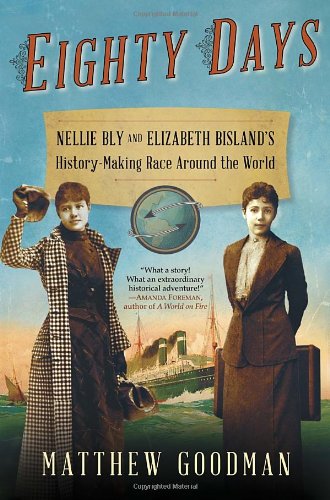
Eighty Days
Matthew Goodman
Nonfiction account of the real 1889 race to beat Verne's fictional 80-day circumnavigation.
Pick this if you want to know Verne's 80-day dash actually happened. This is the true 1889 story of reporters Nellie Bly and Elizabeth Bisland racing each other around the globe to beat Fogg's fictional record — the closest match on this list, and it's nonfiction.

The Adventures of Tom Sawyer
Mark Twain
Playful, episodic adventures with witty narration and youthful mischief.
Pick this if it was the light, episodic wit you enjoyed rather than the journey. Honest warning: this is the loosest fit here — small-town Mississippi, no travel and no deadline — so reach for it only if you're chasing the tone.
The Lost World
Arthur Conan Doyle
Pulpish expedition with steady pacing, exotic locales, and heroic problem-solving.
Pick this if the exotic-locales, expedition-into-the-unknown side is what hooked you. Same era and the same pulp-adventure spirit, with a plateau of living dinosaurs standing in for Fogg's far-flung ports.
The Princess Bride
William Goldman
Witty, romantic adventure that balances humor, action, and clever twists.
Pick this if you're really after the comic, tongue-in-cheek adventure register. It shares the wit and the swashbuckle but none of the travel structure — a mood match, not a plot match.

King Solomon's Mines
H. Rider Haggard
Grip‑tight expedition fiction with exotic settings and a bold, straightforward hero.
Pick this if you liked the confident, striking-out-across-the-map adventurer. Allan Quatermain's trek is the archetype Verne's contemporaries were writing alongside — a treasure quest rather than a timed circuit.
The Great Railway Bazaar
Paul Theroux
Modern travelogue capturing the pleasures and oddities of journeying by train.
Pick this if the how of Fogg's trip — the trains, the border crossings, the texture of transit — was the real pleasure. This is the modern nonfiction counterpart: four months by rail across Asia. Note it's a travelogue, not a plotted story.

The 39 Steps
John Buchan
Breathless chase across landscapes with resourceful protagonist and brisk tempo.
Pick this if the mounting-obstacle tension and sheer momentum are what you want more of. A short, brisk manhunt across the Scottish moors — pure forward motion, if not a trip around the world.
At a glance
These aren't matched by genre label alone. For a book like this, the qualities that matter are its ticking-clock structure, its episodic globe-hopping and its light, problem-solving tone — which is why a Victorian treasure quest and a modern rail travelogue can both belong here for different reasons. The match percentages reflect how many of those dimensions a book shares, not an overall similarity of plot.
| Book | First published | Pages | Closest match on | Match |
|---|---|---|---|---|
The Three Musketeers Alexandre Dumas | 1844 | 648 | Breakneck pacing & camaraderie | 89% |
The Count of Monte Cristo Alexandre Dumas | 1844 | — | Meticulous long-game plotting | 86% |
Eighty Days Matthew Goodman | 2013 | 449 | The real thing, and a true race | 83% |
The Adventures of Tom Sawyer Mark Twain | 1876 | 253 | Playful, episodic mischief | 82% |
The Lost World Arthur Conan Doyle | 1912 | 238 | Expedition into the unknown | 81% |
The Princess Bride William Goldman | 1973 | 399 | Witty adventure & romance | 80% |
King Solomon's Mines H. Rider Haggard | 1885 | 220 | Bold Victorian quest | 79% |
The Great Railway Bazaar Paul Theroux | 1975 | 354 | The romance of the journey itself | 76% |
The 39 Steps John Buchan | 1915 | 473 | Breathless chase & tempo | 75% |
About Around the World in Eighty Days
Published in 1873, Around the World in Eighty Days first ran as a newspaper serial — which is why it still reads in propulsive, cliffhanger-shaped chapters. Jules Verne drew on real headlines: the opening of the Suez Canal and the completion of transcontinental railways had suddenly made a rapid circumnavigation genuinely plausible. It remains Verne's most widely read novel and has been adapted for film, stage and television dozens of times.
Frequently asked questions
What should I read after Around the World in Eighty Days?+
For the closest experience, start with Eighty Days by Matthew Goodman — the true story of two journalists racing around the globe to beat Fogg's record. If you want more of Verne's own pacing and wit, The Three Musketeers and The Count of Monte Cristo by Alexandre Dumas are the natural next steps.
Are there any modern books like Around the World in Eighty Days?+
Yes. Matthew Goodman's Eighty Days (2013) is a modern nonfiction retelling of a real 1889 round-the-world race, and Paul Theroux's The Great Railway Bazaar (1975) captures the pleasure of long-distance train travel that makes up so much of Fogg's journey.
Is there a true story about racing around the world in eighty days?+
There is. In 1889, reporter Nellie Bly set out to beat Phileas Fogg's fictional record and circled the globe in 72 days — while a rival journalist, Elizabeth Bisland, raced her in the opposite direction. Matthew Goodman's Eighty Days tells the full story.
What other Jules Verne books are like Around the World in Eighty Days?+
Verne's other “Extraordinary Voyages” share its spirit of brisk, inventive adventure — most notably Twenty Thousand Leagues Under the Sea, Journey to the Center of the Earth and Michael Strogoff, each of which has its own recommendations page here.
Is Around the World in Eighty Days suitable for children?+
It isn't written specifically for children, but its clear prose, short chapters and low level of violence have long made it popular with younger readers as well as adults. Most editions are comfortable for ages 10 and up.
More books by Jules Verne
See all 22 Jules Verne guides →Want recommendations based on your own favorites?
BookTwin can match you to books by mood, pacing, themes, and emotional payoff — based on 1 to 5 books you tell it you loved.
Try BookTwin