
Books Like From the Earth to the Moon
by Jules Verne
From the Earth to the Moon is built around one clear conceit executed with obsessive, comic seriousness: a post–Civil War artillery club in Baltimore decides to fire a projectile to the Moon. Jules Verne treats that absurd premise as an engineering problem — calculating muzzle velocity, projectile shape, and launch angle — while staging it as public spectacle, political rivalry and international collaboration. The novel alternates technical diagrams and arithmetic with broad characters (Impey Barbicane’s earnest captaincy, the theatrical Michel Ardan) and a running satirical eye on scientific hubris.
If you loved Verne here, you might have been drawn to different things: the book’s hard-SF attention to mechanics and measurable consequence; its playful, slightly parodic take on nineteenth-century science culture; or its globe- and space-sized imagination that turns a civic stunt into a cosmic question. The nine picks below are chosen to reflect those distinct pleasures — other precise, exploratory Verne voyages, early speculative moon and Mars tales, and modern hard-SF that shares the book’s devotion to problem-solving and technical clarity.
Recommended for fans of From the Earth to the Moon

Twenty Thousand Leagues Under the Sea
Jules Verne
Same adventurous, scientific spirit and meticulous engineering detail with exploration tone.
Pick this if you want more of Verne’s detailed engineering thinking and speculative apparatus — this is Verne doing the same work under the sea rather than toward the sky.

A Journey to the Centre of the Earth
Jules Verne
Victorian scientific adventure driven by curiosity and imaginative, methodical exploration.
Pick this if it was the locked‑room, hypothesis‑driven exploration that appealed to you: the same methodical curiosity guides an underground journey instead of a lunar project.
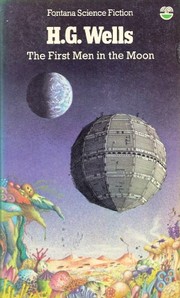
The First Men in the Moon
H. G. Wells
Early speculative moon voyage with satirical and scientific elements like Verne's work.
Pick this if you want a near‑contemporary reimagining of a lunar trip with satirical and speculative elements — note it’s more social satire than Verne’s engineering focus.

The Martian
Andy Weir
Modern hard-SF survival focused on engineering problem-solving and dry humor.
Pick this if it was the dry humor and the nuts‑and‑bolts survival engineering you loved; this modern novel shares that clinician’s approach to technical obstacles.

Rendezvous with Rama
Arthur C. Clarke
Calm, methodical exploration of an enigmatic spacecraft and scientific wonder.
Pick this if you enjoyed the clinical curiosity of Verne’s crew and want a modern analogue where investigators calmly map an unknowable spacecraft rather than throw a projectile at the Moon.

2001: A Space Odyssey
Arthur C. Clarke
Philosophical, technology-driven space story with awe and precise scientific imagination.
Pick this if you liked the larger questions Verne raises about human ambition and technology; this is more meditative and symbolic, trading Verne’s arithmetic for broader philosophical scope.
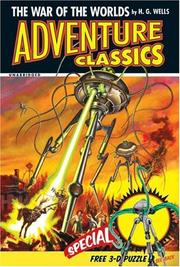
The War of the Worlds
H. G. Wells
Victorian-era speculative science with dramatic encounters and social commentary.
Pick this if you appreciate period speculative science that stages dramatic encounters and social observation — this shares the era’s imaginative reach though its themes skew toward invasion rather than exploration.
Contact
Carl Sagan
Optimistic, scientifically grounded first-contact novel mixing wonder and technical detail.
Pick this if you wanted optimism grounded in scientific method and the cultural implications of discovery — this is a quieter, modern counterpart focused on first contact rather than human engineering feats.
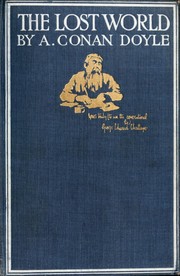
The Lost World
Arthur Conan Doyle
Pulpish Victorian adventure centered on exploration, discovery, and scientific curiosity.
Pick this if it was the Victorian-era appetite for discovery and the pulp adventure tone you enjoyed; this is a looser fit technically but matches the era’s curiosity-driven excursions.
At a glance
Matches emphasize three dimensions of this book: rigorous, calculative engineering detail; a satirical/ civic spectacle frame around scientific ambition; and the exploratory, speculative leap into space. Each recommendation is scored on how many of those elements it shares.
| Book | First published | Pages | Closest match on | Match |
|---|---|---|---|---|
Twenty Thousand Leagues Under the Sea Jules Verne | 1977 | 48 | Methodical scientific detail | 92% |
A Journey to the Centre of the Earth Jules Verne | 1990 | 224 | Inventive expedition logic | 88% |
The First Men in the Moon H. G. Wells | 1900 | 238 | Speculative moon voyage | 86% |
The Martian Andy Weir | 2011 | 407 | Modern hard‑SF problem‑solving | 84% |
Rendezvous with Rama Arthur C. Clarke | 1973 | 256 | Calm, methodical exploration | 82% |
2001: A Space Odyssey Arthur C. Clarke | 1968 | 213 | Philosophical tech drama | 80% |
The War of the Worlds H. G. Wells | 1946 | 206 | Victorian speculative sweep | 77% |
Contact Carl Sagan | 1985 | 432 | Optimistic scientific wonder | 76% |
The Lost World Arthur Conan Doyle | 1900 | 238 | Pulpish exploration spirit | 72% |
About From the Earth to the Moon
De la Terre à la Lune was first published in French in 1865 as part of Jules Verne’s Voyages extraordinaires series. Verne followed it with a direct sequel, Around the Moon (Autour de la Lune). The novel mixes contemporary scientific debates with satire and helped popularize ballistics-based spaceflight imaginings in the nineteenth century.
Frequently asked questions
Is From the Earth to the Moon realistic about space travel?+
Verne aimed for plausibility using nineteenth‑century physics: the ballistics and calculations reflect contemporary understanding, though modern rocketry and human survival needs are not addressed. For more of Verne’s methodical, engineering-driven speculation, see Twenty Thousand Leagues Under the Sea and A Journey to the Centre of the Earth.
Which books capture the same technical problem‑solving tone?+
Modern hard‑SF like The Martian mirrors Verne’s focus on engineering minutiae and wry humor, while Rendezvous with Rama and 2001: A Space Odyssey convey a quieter, methodical scientific wonder that also resonates with Verne’s approach.
Are there other moon voyages from the era to compare?+
Yes. H. G. Wells’s The First Men in the Moon is the closest contemporary speculative response — it shares the moon‑voyage premise but leans more toward satire and social commentary than Verne’s calculation-driven narrative.
Should I read more Jules Verne after this?+
If you want more of Verne’s engineering curiosity and adventure, read Twenty Thousand Leagues Under the Sea and A Journey to the Centre of the Earth; they preserve his blend of technical description, exploration and narrative spectacle.
More books by Jules Verne
See all 22 Jules Verne guides →Want recommendations based on your own favorites?
BookTwin can match you to books by mood, pacing, themes, and emotional payoff — based on 1 to 5 books you tell it you loved.
Try BookTwin