
Books Like Robur the Conqueror
by Jules Verne
Robur the Conqueror centers on an audacious engineer-inventor who upends contemporary aeronautical debate by building a heavier-than-air flying machine and using it to seize control of a meeting of lighter-than-air advocates. The novel is less a conventional voyage than a technological demonstration: set pieces that show Robur's craft outperforming balloons, dramatic aerial maneuvers, lock‑and‑key escapes and a steady undercurrent of argument about progress, mastery and the ethics of invention. The book alternates spectacle — spectacular flight sequences and mechanical detail — with a moral chess game between Robur and the men who oppose him.
Readers come to Robur for different reasons. Some want Verne-level technical imagination and vividly described machines; others are after the proto‑science‑fiction clash between an uncompromising visionary and a conservative establishment. If you loved the novel's mechanical set pieces, its courtroom-of-ideas tone about technology, or its claustrophobic aerial confrontations, the selections below are organized to highlight which of those elements each pick shares most closely.
Recommended for fans of Robur the Conqueror

Twenty Thousand Leagues Under the Sea
Jules Verne
Visionary inventor captain and spectacular seafaring speculative technology adventures.
Pick this if you want more of Verne's technically detailed, charismatic inventor who commands a revolutionary vehicle — this is the closest tonal and mechanical match.
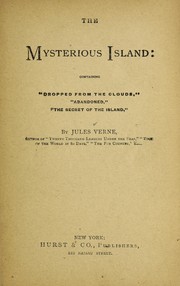
The Mysterious Island
Jules Verne
Ingenious cast, survival ingenuity and speculative inventions on an isolated island.
Pick this if you liked the nuts‑and‑bolts problem-solving and want that cast applied to survival and collective invention rather than a single visionary's control.

Around the World in Eighty Days
Jules Verne
Fast-paced Victorian travel adventure with inventive problem-solving and period technological marvels.
Pick this if it was Verne's clear, plot-driven momentum and practical problem-solving you enjoyed; this swaps Robur's aerial demonstrations for episodic travel and logistics.
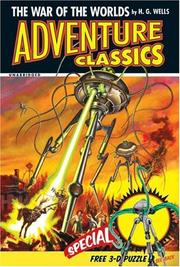
The War of the Worlds
H. G. Wells
Speculative technology, invasion anxiety and brisk, tense Victorian-era science fiction.
Pick this if you want a late‑Victorian sense of technological threat and national‑level stakes; note this has a different mood — more global panic than personal showmanship.

The Island of Doctor Moreau
H. G. Wells
Mad-scientist ethics, grotesque experiments, and dark speculative imagination.
Pick this if you were drawn to the moral questions about experimentation and the consequences of unchecked scientific curiosity; this is darker and more intimate in its experiments.

The Lost World
Arthur Conan Doyle
Exploration, scientific curiosity and dangerous discoveries in a remote, exotic setting.
Pick this if you liked the spirit of discovery and encounters with unexpected natural or scientific phenomena; the focus is exploration rather than aeronautical one‑upmanship.

The Narrative of Arthur Gordon Pym of Nantucket
Edgar Allan Poe
Weird, sea-bound adventure with claustrophobic tension and uncanny occurrences.
Pick this if you appreciated the claustrophobic, uncanny atmosphere of life aboard a single, strange vessel — this leans into maritime weirdness and survival.

A Connecticut Yankee in King Arthur's Court
Mark Twain
Inventive technological satire blending an engineer's pragmatism with imaginative consequences.
Pick this if you enjoyed Verne's debate about machines versus older authorities and want satire that puts an engineer against anachronistic systems; this is lighter and more comedic in tone.
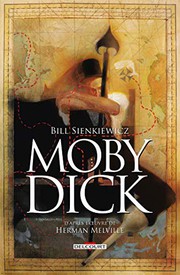
Moby-Dick
Herman Melville
Obsessive captain, grand seafaring scope and philosophical reflection amid adventure.
Pick this if you were fascinated by Robur as a driven, single-minded captain whose personality colors the whole narrative; this shares the motif of captainly obsession but with longer, more philosophical digressions.
At a glance
Matches were chosen on three specific dimensions that define Robur: a visionary or obsessive inventor figure, vivid technical/speculative apparatus, and aerial or seafaring set pieces that create claustrophobic, mechanical confrontations. Each pick shares some combination of those elements.
| Book | First published | Pages | Closest match on | Match |
|---|---|---|---|---|
Twenty Thousand Leagues Under the Sea Jules Verne | 1977 | 48 | Inventor-captain spectacle | 95% |
The Mysterious Island Jules Verne | 1895 | 656 | Group ingenuity & engineering | 90% |
Around the World in Eighty Days Jules Verne | 2013 | 180 | Brisk adventure pacing | 80% |
The War of the Worlds H. G. Wells | 1946 | 206 | Speculative invasion tension | 78% |
The Island of Doctor Moreau H. G. Wells | 2017 | 192 | Mad‑science ethics | 75% |
The Lost World Arthur Conan Doyle | 1900 | 238 | Exploration & discovery | 74% |
The Narrative of Arthur Gordon Pym of Nantucket Edgar Allan Poe | 1994 | 301 | Weird seabound tension | 70% |
A Connecticut Yankee in King Arthur's Court Mark Twain | 1889 | 397 | Technological satire | 68% |
Moby-Dick Herman Melville | 1851 | 452 | Obsessive captain theme | 65% |
About Robur the Conqueror
Robur the Conqueror (original French title: Robur le Conquérant) was published in 1886. Jules Verne wrote it amid late‑19th‑century debates over air travel; the novel stages those debates through the figure of Robur and his extraordinary flying machine. The book is part polemic, part adventure, and sits within Verne's broader «voyages extraordinaires» project.
Frequently asked questions
Is Robur the Conqueror connected to other Jules Verne novels?+
Robur is thematically linked to Verne's other technological adventures: it shares an inventor‑at‑the-center structure and detailed speculative machinery with Twenty Thousand Leagues Under the Sea and the resourceful, problem-solving spirit of The Mysterious Island. It stands apart in being a direct polemic about flight technology rather than a globe-trotting voyage.
Should I read other Verne books next?+
If you want more of Verne's mechanical imagination and a charismatic, enigmatic inventor-captain, read Twenty Thousand Leagues Under the Sea. If you prefer group ingenuity, survival engineering and stranded-island invention, The Mysterious Island mirrors Robur's focus on applied science and communal problem-solving.
Is Robur more science fiction or adventure?+
It's both. The plot is structured as an adventure — capture, escape, aerial duels — but Verne foregrounds speculative technology and the ethics of invention throughout. For pure adventure with less technical polemic, Around the World in Eighty Days emphasizes pacing and episodic problem-solving rather than sustained technological debate.
Are there works here that explore the moral side of invention?+
Yes. Several picks engage the ethics of technology or obsessive creators in different registers: Twenty Thousand Leagues Under the Sea offers a charismatic technologist whose motives are ambiguous, while titles by other authors on the list treat mad science or invasion anxiety from other ethical angles.
More books by Jules Verne
See all 22 Jules Verne guides →Want recommendations based on your own favorites?
BookTwin can match you to books by mood, pacing, themes, and emotional payoff — based on 1 to 5 books you tell it you loved.
Try BookTwin