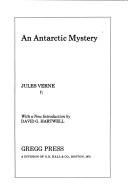
Books Like An Antarctic Mystery
by Jules Verne
An Antarctic Mystery is Verne’s return to shivering, white horizons: a locked-ship, iceberg-bound puzzle built from wreckage, conflicting eyewitnesses and a mysteriously preserved man encountered in the ice. The novel reads like a forensic shipboard drama—investigative chapters that reconstruct a lost voyage, technical descriptions of polar navigation and survival, and a slow reveal that ties directly back to Edgar Allan Poe’s Narrative of Arthur Gordon Pym. Its tone is clinical rather than romantic; the suspense comes from piecing together evidence and the creeping, inhospitable logic of the polar environment.
Readers come to this book for different reasons. Some want the methodical, detective-like unspooling of a maritime mystery; others prefer Verne’s exacting scientific detail about ships, currents and ice; some want the psychological pressure of men trapped in small, freezing spaces. There’s also the intertextual thrill: Verne deliberately continues Poe’s tale, so part of the book’s pleasure is its conversation with an earlier, darker polar myth. The recommendations below are organized by which of those elements each book most closely echoes.
Recommended for fans of An Antarctic Mystery
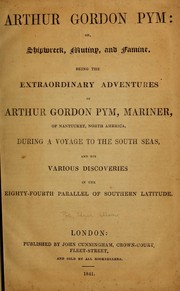
The Narrative of Arthur Gordon Pym
Edgar Allan Poe
Sea voyage into unknown polar mystery and claustrophobic survival.
Pick this if you want the original antecedent that Verne answers. This is where the mystery Verne tries to solve begins — dark, fragmentary, and claustrophobic in a way Verne rewrites.
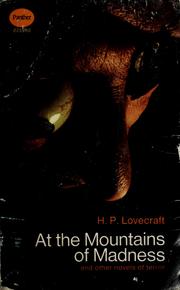
At the Mountains of Madness
H. P. Lovecraft
Antarctic expedition that uncovers ancient, cosmic horrors and isolation.
Pick this if you want a far bleaker, more explicitly horrific take on Antarctic exploration. It amplifies the isolation and the sense of ancient, inhuman discovery beyond Verne’s rational explanations.
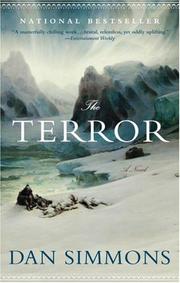
The Terror
Dan Simmons
Fictionalized Franklin expedition combining historical detail and creeping dread.
Pick this if you want a fictionalized, historically detailed retelling of a doomed polar voyage with mounting dread and meticulous period detail similar to Verne’s investigatory focus.

Twenty Thousand Leagues Under the Sea
Jules Verne
Scientific detail, Victorian exploration ethos, and claustrophobic nautical adventure.
Pick this if you loved Verne’s methodical, scientific chapters about ships and instruments. This is a close tonal cousin in its Victorian scientific voice and enclosed-ship atmosphere.
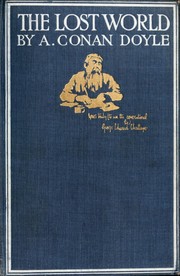
The Lost World
Arthur Conan Doyle
Victorian expedition into remote, dangerous unknowns with scientific curiosity.
Pick this if you’re drawn to the era’s combination of scientific curiosity and adventurous exploration. It trades polar ice for a plateau of prehistoric danger but keeps the same exploratory mechanics.

The North Water
Ian McGuire
Brutal 19th-century Arctic whaling voyage, bleak atmosphere and moral darkness.
Pick this if you want the moral grimness and brutal work-of-men-at-sea aspect that underlies some of Verne’s harsher scenes. This is darker and more violent—less puzzle, more survival and moral rot.

The Sea-Wolf
Jack London
Philosophical, brutal seafaring survival and human confrontation with nature.
Pick this if you enjoyed the psychological clashes among men confined at sea. It’s more overtly philosophical and brutal, so expect character interrogation rather than puzzle-solving.
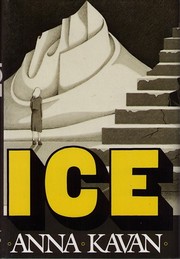
Ice
Anna Kavan
Dreamlike, icy landscape and obsessive, claustrophobic psychological tension.
Pick this if you want a dreamlike, hallucinatory frozen landscape and obsessive, interior tension. Note: this is more psychological and surreal than Verne’s evidence-driven approach — a looser fit.

The Ice Limit
Douglas Preston and Lincoln Child
High-stakes expedition, technical detail, and mounting peril around a frozen object.
Pick this if you liked the technical planning and escalating peril around a single frozen objective. This shares the expedition mechanics, though it’s modern commercial thriller rather than Victorian rationalism.
At a glance
Matches were chosen on three concrete dimensions present in Verne’s novel: locked-ship/shipwreck mystery and reconstruction, the oppressive Antarctic/Polar setting and claustrophobic survival, and the book’s literary/genre lineage (direct engagement with Poe). Each pick echoes one or more of those axes.
| Book | First published | Pages | Closest match on | Match |
|---|---|---|---|---|
The Narrative of Arthur Gordon Pym Edgar Allan Poe | 1838 | 203 | Direct Poe sequel | 95% |
At the Mountains of Madness H. P. Lovecraft | 1968 | 192 | Cosmic Antarctic dread | 90% |
The Terror Dan Simmons | 2007 | 770 | Historical-expedition dread | 88% |
Twenty Thousand Leagues Under the Sea Jules Verne | 1977 | 48 | Technical maritime detail | 85% |
The Lost World Arthur Conan Doyle | 1900 | 238 | Victorian expedition spirit | 82% |
The North Water Ian McGuire | 2016 | 336 | Bleak whaling realism | 78% |
The Sea-Wolf Jack London | 1900 | 321 | Philosophical seafaring struggle | 76% |
Ice Anna Kavan | 1967 | 158 | Surreal, icy obsession | 74% |
The Ice Limit Douglas Preston and Lincoln Child | 2000 | 491 | High-stakes polar expedition | 72% |
About An Antarctic Mystery
An Antarctic Mystery (original French title Le Sphinx des glaces) is a late-19th-century novel by Jules Verne that explicitly extends Edgar Allan Poe’s Narrative of Arthur Gordon Pym. Verne frames his plot as an investigation into a vanished Antarctic expedition, blending maritime technicalities with speculative explanation for Poe’s enigmatic ending.
Frequently asked questions
Is An Antarctic Mystery a sequel to Edgar Allan Poe’s ship tale?+
Yes. Jules Verne deliberately takes up the loose, uncanny ending of Poe’s Narrative of Arthur Gordon Pym and builds a rationalized, investigatory continuation that attempts to explain what happened in the polar south.
Which of these is the most similar in atmosphere?+
For atmosphere and cosmic isolation, At the Mountains of Madness is the closest match here; for the claustrophobic nautical detail and Victorian scientific voice, Twenty Thousand Leagues Under the Sea is a nearer tonal cousin.
Do I need to read Poe’s Narrative of Arthur Gordon Pym first?+
You don’t strictly need it, but reading Poe first sharpens the experience: Verne is responding to specific mysteries from that text, and the novel functions as an explanatory footnote to Poe’s ending.
Is this book more adventure or more horror?+
It sits between both: Verne keeps a rational, quasi-scientific approach, so the horror is subdued and analytic rather than outright supernatural. If you want full cosmic horror, At the Mountains of Madness leans harder in that direction.
Which other Jules Verne books feel similar?+
Twenty Thousand Leagues Under the Sea shares Verne’s precise nautical science and enclosed-ship tension; several of his other “Extraordinary Voyages” return to the same investigatory, technically detailed mode.
More books by Jules Verne
See all 22 Jules Verne guides →Want recommendations based on your own favorites?
BookTwin can match you to books by mood, pacing, themes, and emotional payoff — based on 1 to 5 books you tell it you loved.
Try BookTwin