
Books Like Walkaway
by Cory Doctorow
Walkaway is built around a simple speculative hinge: when replication and post-scarcity tech make most material needs free, some people choose to “walk away” from property-based society and build open, cooperative communities. Doctorow stages that premise through tech-savvy protagonists who practice real-world hacking, peer production and distributed governance, and he frames the novel as a clash between radically different political logics — property-defending elites, state violence and emergent commons-based institutions. The plot combines literal tinkering (3D-printing, software forks, biohacking) with sustained debates about risk, justice and what counts as sustainable abundance.
Readers come to Walkaway for different reasons: some want the speculative systems-design — how would a society really run if scarcity collapsed? Others want the activist energy of a DIY community that prototypes alternative institutions under pressure. And many stay for Doctorow's voice: his mix of clear tech explanation, moral argument and those scenes where a small technical trick turns a political stalemate into a tactical opening. The picks below are grouped by which of those elements they echo most strongly.
Recommended for fans of Walkaway

Little Brother
Cory Doctorow
Young hackers resisting surveillance and building autonomous communities.
Pick this if you want more of Doctorow's practical, activist tech tactics and a younger-cast, street-level story about resisting surveillance.
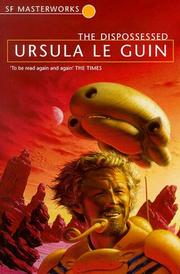
The Dispossessed
Ursula K. Le Guin
A nuanced exploration of anarchist society and personal freedom.
Pick this if you wanted a careful, philosophical depiction of a stateless, cooperative society; expect longer, quieter social exploration rather than speculative tinkering.
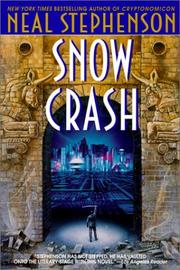
Snow Crash
Neal Stephenson
Fast-paced cyberpunk with worldbuilding about fragmented corporate societies.
Pick this if you enjoyed Walkaway's critique of corporate power but want it served with breakneck pacing, immersive virtual-world set pieces and satirical, hyper-stylized worldbuilding.
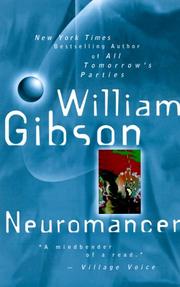
Neuromancer
William Gibson
Foundational cyberpunk tackling AI, corporate power, and hacking culture.
Pick this if you seek foundational explorations of AI, hacking culture and corporate hegemony with a darker, moodier tone than Walkaway's community optimism.

The Circle
Dave Eggers
Surveillance, tech utopianism and the social costs of transparency.
Pick this if you want a contemporary, cautionary look at tech firms and social-media-driven transparency; it's nearer to Walkaway on the surveillance theme but less focused on communal alternatives.
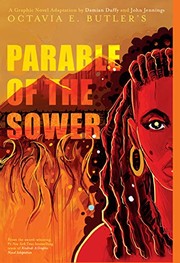
Parable of the Sower
Octavia E. Butler
Community-building and survival amid societal collapse and visionary leadership.
Pick this if you liked Walkaway's focus on forming new social orders and want a narrative about survival, leadership and building community under pressure — though this pick is more prescriptive and religiously inflected.
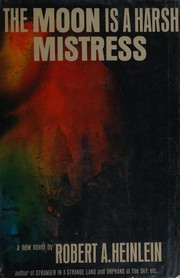
The Moon Is a Harsh Mistress
Robert A. Heinlein
Revolution, self-governance, and tech-driven political change.
Pick this if you appreciated the plot's revolutionary edge and want a story where technological ingenuity becomes central to a political uprising, albeit in a more libertarian register.

Jennifer Government
Max Barry
Satirical take on corporatism, consumer culture, and resistance.
Pick this if you liked Walkaway's critique of corporate power but prefer a satirical, exaggerated take where marketing logic and consumer culture are weaponized; it's a looser, more comedic fit.

The Power
Naomi Alderman
Sudden social upheaval reshaping power dynamics and moral orders.
Pick this if you responded to Walkaway's interest in how power shifts when norms break down; pick this for a smaller-scale exploration of rapid changes to social relations and who holds authority.
At a glance
Matches were chosen for how they reflect Walkaway's three core dimensions: practical, decentralized technologies and hacking; experiments in alternative social orders and communal living; and political conflict driven by inequality and surveillance.
| Book | First published | Pages | Closest match on | Match |
|---|---|---|---|---|
Little Brother Cory Doctorow | 2008 | 383 | DIY hacking culture | 92% |
The Dispossessed Ursula K. Le Guin | 1974 | 352 | Anarchist social theory | 90% |
Snow Crash Neal Stephenson | 1992 | 460 | High-velocity cyberpunk | 86% |
Neuromancer William Gibson | 1984 | 317 | Foundational cyberpunk themes | 84% |
The Circle Dave Eggers | 2013 | 491 | Surveillance & tech utopianism | 78% |
Parable of the Sower Octavia E. Butler | 1993 | 320 | Community-building & vision | 77% |
The Moon Is a Harsh Mistress Robert A. Heinlein | 1965 | 360 | Revolutionary tech politics | 75% |
Jennifer Government Max Barry | 2003 | 352 | Satire of corporatism | 72% |
The Power Naomi Alderman | 1998 | 352 | Sudden social upheaval | 70% |
About Walkaway
Walkaway was published in 2017 and is one of Cory Doctorow's full-length novels exploring digital rights, distributed production and political organizing. The book grew out of Doctorow's long-standing engagement with open-source culture, privacy advocacy and the practical politics of technological change.
Frequently asked questions
Which book should I read next if I liked Walkaway's tech-first worldbuilding?+
If it was the hands-on tech and hacker culture that hooked you, Little Brother by Cory Doctorow doubles down on grassroots hacking, surveillance resistance and the practical use of tech by ordinary people.
I loved the book's political theory — are there novels that explore anarchist or anti-capitalist societies in depth?+
Yes. The Dispossessed is the closest match in this list for a nuanced, sustained literary exploration of an anarchist society and the personal costs and freedoms that come with it.
Which picks are the best for cyberpunk-style action?+
Snow Crash and Neuromancer are the obvious cyberpunk choices here: they share Walkaway's interest in fragmented corporate power, hacking culture and fast, high-concept worldbuilding, though they skew more toward cyberspace noir than community-building.
Are there books here that look at surveillance and corporate power like Walkaway does?+
The Circle tackles corporate surveillance and transparency as social policy, and Neuromancer examines corporate dominance and AI — both resonate with Walkaway's concerns about power, though they take different tones and solutions.
More books by Cory Doctorow
Want recommendations based on your own favorites?
BookTwin can match you to books by mood, pacing, themes, and emotional payoff — based on 1 to 5 books you tell it you loved.
Try BookTwin