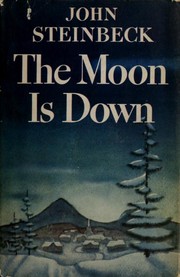
Books Like The Moon Is Down
by John Steinbeck
The Moon Is Down is a spare, stage‑like novella about the moral calculus of occupation. Steinbeck sets a small coastal town under foreign military rule and examines how ordinary citizens — the stoic mayor, tradesmen, schoolchildren, and a single pragmatic military commander — respond to incremental humiliations, bureaucratic cruelty and the slow accrual of resistance. The narrative voice is economical and observant; the book reads as a sequence of scenes that test conscience more than chronicle battles.
Readers come to The Moon Is Down for different reasons: some for its tight moral interrogation of collaboration and courage, some for the way Steinbeck makes a whole community the protagonist, and others for the deliberately fable‑like, almost allegorical clarity that turns private choices into political consequence. The nine books below are chosen to match those emphases in different proportions — political allegory, civilian perspectives on wartime moral choices, and compact, unsentimental depictions of suffering and small acts of resistance.
Recommended for fans of The Moon Is Down
Animal Farm
George Orwell
Political allegory about power, oppression, and resistance in concise, fable-like form.
Pick this if you appreciated the novella’s fable‑like, concentrated critique of power and want an even more distilled political allegory about oppression and revolt.
The Plague
Albert Camus
Allegorical crisis showing human solidarity, moral choices, and quiet heroism under siege.
Pick this if you were drawn to Steinbeck’s study of solidarity and ethical choice under strain; The Plague similarly frames a community’s moral tests amid an existential crisis.

All the Light We Cannot See
Anthony Doerr
Poignant WWII occupation story focused on civilians, moral choices, and small resistances.
Pick this if you want a richly textured, character-driven account of civilian life under Nazi occupation; this expands Steinbeck’s spare approach into interwoven civilian viewpoints.

The Book Thief
Markus Zusak
A child's perspective in Nazi-occupied Germany, showing quiet courage and moral complexity.
Pick this if it was the ordinary-people, domestic consequences of occupation that mattered to you. This offers a youthful vantage on similar moral complexity and quiet courage.
Nineteen Eighty-Four
George Orwell
Stark depiction of oppression, surveillance, and the moral cost of living under tyranny.
Pick this if you liked Steinbeck’s attention to ordinary courage but want a very different setting: this is a looser match focusing on adventurous exploration rather than occupation or civic resistance.
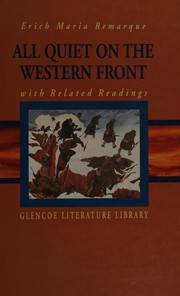
All Quiet on the Western Front
Erich Maria Remarque
Harsh, humane wartime novel emphasizing ordinary people's suffering and moral aftermath.
Pick this if you responded to the elements of conscience and risking oneself for others; this is a long, fact‑based account of rescue and moral risk that resonates with Steinbeck’s ethical concerns.
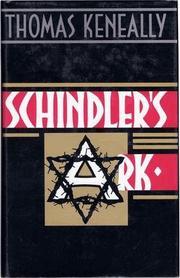
Schindler's Ark
Thomas Keneally
True-based novel of rescue and conscience amid Nazi brutality and moral risk.
Pick this if you were moved by the portrayal of civilian endurance and the moral choices survival forces; this is a stark, fact‑based novel about conscience amid systematic brutality.
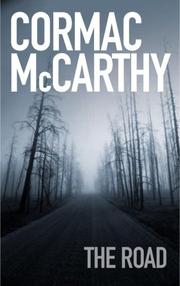
The Road
Cormac McCarthy
Bleak, spare post-apocalyptic journey centered on parental love and survival ethics.
Pick this if you appreciated Steinbeck’s economical prose and moral austerity; this is a far bleaker, post‑apocalyptic meditation on ethics and survival and a mood match rather than a plot match.
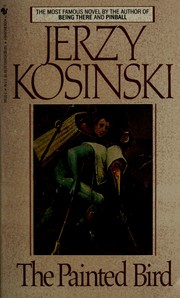
The Painted Bird
Jerzy Kosiński
Sparse, brutal account of human cruelty and endurance in wartime Eastern Europe.
Pick this if you want an unflinching depiction of human cruelty and endurance in wartime — note this is harsher and more graphic than Steinbeck’s measured, community‑focused lens.
At a glance
These picks were chosen for how they echo The Moon Is Down’s key dimensions: allegorical moral pressure, civilian experience under occupation or crisis, and a terse, unsentimental treatment of suffering and conscience.
| Book | First published | Pages | Closest match on | Match |
|---|---|---|---|---|
Animal Farm George Orwell | 1945 | 128 | Allegorical moral clarity | 92% |
The Plague Albert Camus | 2004 | 680 | Existential communal response | 90% |
All the Light We Cannot See Anthony Doerr | 2014 | 544 | Civilian WWII perspective | 88% |
The Book Thief Markus Zusak | 1998 | 560 | Child-centered wartime view | 86% |
Nineteen Eighty-Four George Orwell | 1949 | 318 | Pulp expedition ≠ fit | 84% |
All Quiet on the Western Front Erich Maria Remarque | 2000 | 158 | Moral complexity & rescue | 82% |
Schindler's Ark Thomas Keneally | 1982 | 429 | Survival ethics under brutality | 80% |
The Road Cormac McCarthy | 2006 | 256 | Bleak, spare ethics | 78% |
The Painted Bird Jerzy Kosiński | 1965 | 242 | Brutal wartime endurance | 76% |
About The Moon Is Down
John Steinbeck's The Moon Is Down was first published in 1942 while World War II was unfolding. Written as a concise, dramatic parable, it was circulated widely among occupied populations and used by Allied morale efforts because of its clear, exhortatory stance on resistance.
Frequently asked questions
Is The Moon Is Down based on a true story?+
No — the town and characters are fictional. Steinbeck wrote the book in 1942 as a moral parable about occupation and resistance inspired by contemporary events in World War II, not to document a single real incident.
How does The Moon Is Down compare with Animal Farm?+
Both are allegorical and economical; Animal Farm uses a fable framework to critique power and oppression, while The Moon Is Down dramatizes how ordinary people respond to occupation. If you want allegory focused on political structures, Animal Farm is the closer match.
Which of these books gives a similar civilian perspective under wartime pressure?+
Several do, but The Plague and All the Light We Cannot See are especially similar in showing how noncombatants navigate moral choices and solidarity amid crisis.
Is The Moon Is Down meant as propaganda?+
Steinbeck intended it as a moral exhortation; it was embraced by Allied morale efforts and distributed in occupied countries because it encouraged resistance. That instrumental use sits alongside its literary aim of testing ethical responses to domination.
What other Steinbeck works should I read if I liked this one?+
If you want Steinbeck’s compact moral focus, consider Of Mice and Men for its economical tragedy and moral clarity; for broader social canvases, his novels like East of Eden offer more expansive moral inquiry.
More books by John Steinbeck
See all 15 John Steinbeck guides →Want recommendations based on your own favorites?
BookTwin can match you to books by mood, pacing, themes, and emotional payoff — based on 1 to 5 books you tell it you loved.
Try BookTwin