
Books Like Eruption
by Michael Crichton
Eruption is built on Michael Crichton’s familiar formula: a precise scientific premise pushed to catastrophic extremes, a roster of specialists assembled to understand the phenomenon, and short, cinematic scenes that escalate technical detail into immediate peril. The novel frames a volcanic event as a problem to be diagnosed and managed — sensors, models, human error and institutional inertia all play visible roles — and it keeps the reader moving from lab to field to crisis-response with brisk, clinical prose.
If you liked Eruption, pin down what really worked for you. Was it Crichton’s insistence on procedural realism and the way he turns arcane scientific processes into suspense? The ensemble cast of specialists and the ethical gray areas that emerge under pressure? Or the sheer, relentless forward motion of a disaster narrative that forces characters to make fast, consequential choices? The picks below are chosen to match those different pleasures: close genre cousins by Crichton himself, technical-scale disaster fiction by other writers, and tighter, claustrophobic survival stories that share Eruption’s grim logic.
Recommended for fans of Eruption
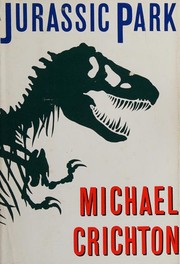
Jurassic Park
Michael Crichton
Science-driven catastrophe with rapid pacing and ensemble survival drama.
Pick this if you want the most direct dose of Crichton’s method: clinical scientific setup, escalating failure of containment, and an ensemble cast scrambling to restore control.

The Andromeda Strain
Michael Crichton
Clinical scientific mystery turning into an escalating, life-or-death crisis.
Pick this if you liked the laboratory-to-field investigative chain of command and the hard-edged focus on detection, containment and the ethical decisions that follow.
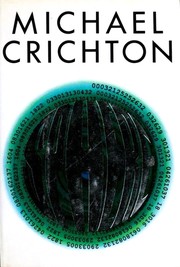
Sphere
Michael Crichton
Isolated team faces an unknowable scientific phenomenon under intense pressure.
Pick this if you appreciated the way teams under extreme stress make technical choices; Sphere trades geological disaster for an unknowable phenomenon but preserves the same claustrophobic problem-solving.

The Swarm
Frank Schätzing
Oceanic, science-based catastrophe with global stakes and ensemble investigators.
Pick this if you want another large-scale, science-rooted catastrophe with investigators and officials coordinating a global response. Note: this is a match on scale and investigation rather than authorial voice.

Flood
Stephen Baxter
Relentless, scientifically-grounded natural disaster and large-scale survival story.
Pick this if you liked disaster-as-infrastructure-failure and wide-ranging survival logistics; this offers similar nonstop escalation and technical grounding, though with a different authorial register.

State of Fear
Michael Crichton
Big-picture environmental catastrophe mixed with techno-political thriller elements.
Pick this if you were engaged by the institutional and policy-side conflicts around scientific threats. This one foregrounds political maneuvering alongside the science.

Seveneves
Neal Stephenson
Epic, technically detailed survival after sudden global catastrophe.
Pick this if you were after an epic, technically detailed account of human survival after sudden catastrophe. It shares the big-picture, science-heavy imagination even as it operates on a grander temporal scale.
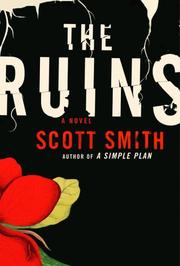
The Ruins
Scott Smith
Nature-as-antagonist horror with claustrophobic pacing and brutal survival stakes.
Pick this if you wanted the elemental menace of nature itself to be the antagonist and for survival to feel immediate and brutal. This is a tighter, bloodier fit than the big scientific overviews.
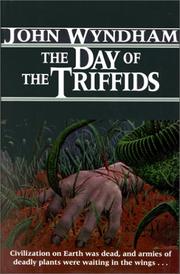
The Day of the Triffids
John Wyndham
Widespread ecological disaster and human survival with speculative science themes.
Pick this if you enjoyed speculative science driving societal collapse and human survival themes. This share is more thematic than procedural — a looser match to Crichton’s specific scientific method.
At a glance
Matches were selected for three specific dimensions: Crichton’s scientific/technical framing, ensemble/problem-solving structure, and the scale of the disaster-driven stakes. Some picks align on all three; others are included because they excel in one or two of those areas.
| Book | First published | Pages | Closest match on | Match |
|---|---|---|---|---|
Jurassic Park Michael Crichton | 1990 | 455 | Science-driven catastrophe | 94% |
The Andromeda Strain Michael Crichton | 1969 | 295 | Clinical procedural thriller | 92% |
Sphere Michael Crichton | 1980 | 385 | Isolated-team pressure | 88% |
The Swarm Frank Schätzing | 2007 | 896 | Ensemble, global stakes | 85% |
Flood Stephen Baxter | 2008 | 496 | Relentless survival scope | 83% |
State of Fear Michael Crichton | 2004 | 678 | Techno-political controversy | 82% |
Seveneves Neal Stephenson | 2015 | 861 | Epic technical survival | 80% |
The Ruins Scott Smith | 2005 | 336 | Nature-as-antagonist horror | 76% |
The Day of the Triffids John Wyndham | 1951 | 270 | Speculative ecological disaster | 75% |
About Eruption
Eruption is a Michael Crichton disaster techno-thriller that centers a volcanic catastrophe and the scientific, political and logistical responses it provokes. It uses procedurally detailed scenes — seismic monitoring, evacuation logistics, institutional debate — as the primary means of generating suspense. The book sits squarely in Crichton’s oeuvre of science-driven popular fiction that blends research with fast pacing.
Frequently asked questions
Which other Michael Crichton books read like Eruption?+
Jurassic Park, The Andromeda Strain and Sphere are the closest Crichton analogues: each foregrounds a scientific premise and escalates methodical research into life-or-death consequences while maintaining tight pacing.
Are there recommended books that focus on technical realism and large-scale catastrophe?+
Yes. The Swarm and Flood both take a research-driven approach to planetary-scale threats and feature ensemble casts of investigators and responders, making them good matches on technical and global-stakes grounds.
Which picks capture the claustrophobic survival feeling of Eruption?+
Sphere and The Ruins replicate the pressured-team dynamic and claustrophobic decision-making; Sphere does so with a high-tech unknown, The Ruins with nature-as-antagonist horror.
Do any of these picks emphasize political or institutional friction like Crichton often does?+
State of Fear foregrounds techno-political controversy and institutional dynamics directly, while The Andromeda Strain and Jurassic Park show how organizations respond under scientific crisis.
More books by Michael Crichton
See all 14 Michael Crichton guides →Want recommendations based on your own favorites?
BookTwin can match you to books by mood, pacing, themes, and emotional payoff — based on 1 to 5 books you tell it you loved.
Try BookTwin