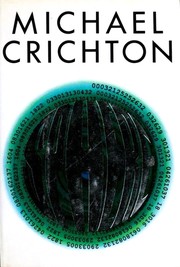
Books Like Sphere
by Michael Crichton
Sphere locks a small team of specialists inside an alien spacecraft at the bottom of the Pacific and then steadily unspools two interlocking engines: high-tech exposition about what the object could be, and escalating psychological unraveling among the humans who study it. The novel balances forensic-science proceduralism — sonar scans, decompression rigs, careful hypothesis-testing — with scenes in which private fears and suppressed memories are externalized into literal, dangerous phenomena. If you loved Sphere, you probably responded to one or more of those precise features: the closed-setting containment drama; the combination of accessible science with high-stakes speculations about consciousness; or the way character revelation becomes a plot device when the unknown starts to manifest inner lives.
The nine books below were chosen to isolate those pleasures. Some are other Michael Crichton novels that replicate his signature blend of scientific detail and breakneck plotting; others evoke Sphere’s claustrophobia, first-contact puzzlement or creeping psychological horror. Each pick notes exactly which axis it matches — and where it deliberately diverges — so you can pick by what you want more of: the science, the dread, or the moral questions about human curiosity.
Recommended for fans of Sphere

The Andromeda Strain
Michael Crichton
Medical-science thriller with confined team, procedural tension, and existential stakes.
Pick this if you want the purest repeat of Sphere’s formula: a contained lab, methodical procedures, and existential stakes driven by a mysterious biological/technological threat.
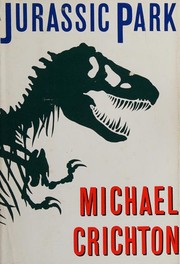
Jurassic Park
Michael Crichton
High-concept science gone wrong, fast pacing, moral/ethical questions and action.
Pick this if you loved Crichton’s mix of high-concept science and breakneck action. Expect similar ethical questions about human hubris and readable technical set pieces.
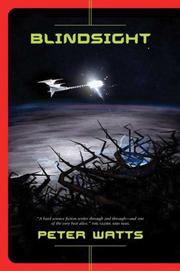
Blindsight
Peter Watts
Hard-SF first-contact with intense cerebral tension and unsettling psychological themes.
Pick this if you want harder, more philosophically dense first-contact science fiction with intense cognitive and epistemological puzzles — note this is a more cerebral and darker tone than Crichton’s prose.

Prey
Michael Crichton
Nanotech thriller with paranoia, escalating danger, and tech-focused explanation scenes.
Pick this if it was the emergent-technology paranoia and escalating, explainable threats that gripped you. This matches Sphere on mounting dread caused by a technical system, though the tech differs (nanotech swarms vs. an alien artefact).

Solaris
Stanislaw Lem
Philosophical first-contact tale with psychological mystery and claustrophobic research station setting.
Pick this if it was Sphere’s meditation on consciousness and the unknowable that appealed. This is a direct match on psychological first-contact questions, with a quieter, more contemplative tempo.

Annihilation
Jeff VanderMeer
Strange-environment exploration, creeping unease, and ambiguous psychological revelations.
Pick this if you were most attracted to the creeping, uncanny atmosphere that erodes certainty. This is more about mood and ambiguous revelation than Crichton’s procedural solutions, so it’s a looser match on the tech side.

The Silent Corner
Dean Koontz
Relentless thriller mixing technology, conspiracy, and a determined protagonist uncovering dangerous truths.
Pick this if you wanted a thriller voice that rings similar to Crichton’s pacing and tech-focus, but be aware the narrative leans toward a lone protagonist uncovering a broad conspiracy rather than a confined scientific team.

The Girl With All the Gifts
M.R. Carey
Science-driven horror with moral complexity, confined group dynamics, and mounting dread.
Pick this if you liked the moral complexity of using science as a plot engine. This brings science-driven horror and tough ethical dilemmas, but centers different scientific premises and a different emotional register.
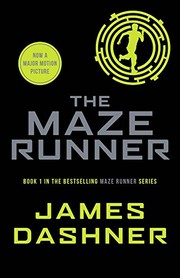
The Maze Runner
James Dashner
Group trapped in baffling environment, escalating threats, and discovery-driven pacing.
Pick this if it was the baffling-environment and group-dynamics elements that hooked you. This is younger-skewing and more plot-driven; a looser fit if you mainly wanted Crichton’s scientific exposition.
At a glance
Matches prioritize three dimensions of Sphere: contained-team setup, hard-ish scientific/technical explanation, and psychological/ontological unease. Percentages reflect overlap across those specific axes, not general quality or tone.
| Book | First published | Pages | Closest match on | Match |
|---|---|---|---|---|
The Andromeda Strain Michael Crichton | 1969 | 295 | Quarantined scientific team | 92% |
Jurassic Park Michael Crichton | 1990 | 455 | Science-driven catastrophe | 90% |
Blindsight Peter Watts | 2006 | 384 | Hard first-contact rigor | 86% |
Prey Michael Crichton | 2002 | 464 | Nanotech paranoia & escalation | 85% |
Solaris Stanislaw Lem | 1961 | 224 | Philosophical first-contact | 84% |
Annihilation Jeff VanderMeer | 2014 | 208 | Strange-environment ambiguity | 82% |
The Silent Corner Dean Koontz | 2017 | 464 | Conspiracy plus tech thriller | 78% |
The Girl With All the Gifts M.R. Carey | 2014 | 416 | Science-horror with ethics | 74% |
The Maze Runner James Dashner | 2009 | 375 | Trapped-group mystery | 70% |
About Sphere
Sphere was published in 1987 and became one of Michael Crichton’s best-known midcareer novels. It combines contemporary marine science, a near-future technological milieu, and a psychological premise in a contained, suspense-driven structure.
Frequently asked questions
Which Michael Crichton books most resemble Sphere?+
The closest are The Andromeda Strain and Prey. The Andromeda Strain shares the quarantined-team, procedural approach; Prey shares paranoia about emergent technology and the step-by-step unraveling of a supposedly controlled experiment.
Do any of these picks focus more on psychology than technology?+
Yes. Solaris and Annihilation tilt much more toward psychological ambiguity and subjective experience while still using a research-station framework. They offer less technobabble and more sustained existential mystery than Crichton’s most mechanistic scenes.
I liked Sphere’s scientific detail. Which picks double down on that?+
Read The Andromeda Strain and Jurassic Park for tightly argued scientific premises laid out in readable procedural sequences. Prey also emphasizes technical mechanisms, but applied to emergent, hostile systems rather than an alien artefact.
Are any of these books YA or aimed at younger readers?+
No. The Maze Runner is a YA title with a framed mystery and group dynamics, but it is tonally different from Sphere; the rest are adult novels with mature themes and varying levels of scientific detail.
More books by Michael Crichton
See all 14 Michael Crichton guides →Want recommendations based on your own favorites?
BookTwin can match you to books by mood, pacing, themes, and emotional payoff — based on 1 to 5 books you tell it you loved.
Try BookTwin