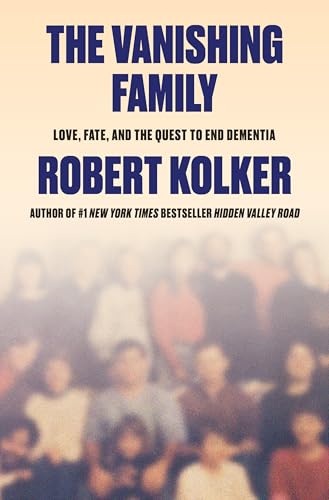
Books Like The Vanishing Family
by Robert Kolker
The Vanishing Family is a tightly reported, character-driven nonfiction that alternates two trajectories: an intimate family saga of nine siblings facing a hereditary frontotemporal dementia, and the parallel scientific chase to identify the mutation and find a cure. Robert Kolker foregrounds individual lives — a mother whose personality dissolved in middle age, the 50–50 genetic risk for each child, and the daily logistics of caretaking — while explaining the genetics, clinical trials, and laboratory breakthroughs that give the story its forward motion.
If you loved The Vanishing Family, you were likely drawn to one or more specific elements: the wrenching human portrait of a family living under genetic uncertainty; clear, patient explanations of complex biomedical science; reporting that links policy, lab work and bedside experience; or Kolker’s balance of empathy and rigorous sourcing. The nine recommendations below are grouped by which of those elements they most closely echo, so you can pick by whether you want another family-centered investigation, a lab-centered scientific history, or reporting that foregrounds clinical and ethical questions of inheritance and risk.
Recommended for fans of The Vanishing Family
Hidden Valley Road
Robert Kolker
Another intimate family saga intertwining inherited mental illness, sibling experiences, and groundbreaking scientific research.
Pick this if you want more of Kolker’s method — immersive reporting on one family that illuminates broader psychiatric and genetic science; this is the closest tonal and structural match.

Mercies in Disguise
Gina Kolata
A family confronts a devastating inherited neurological disease while researchers race to understand its genetic cause.
Pick this if you want another account of a family confronting a devastating inherited neurological disease while researchers race to identify a genetic cause and develop interventions.
The Family That Couldn't Sleep
D. T. Max
Traces fatal familial insomnia through generations while explaining the scientific discovery of prion diseases.
Pick this if you’re drawn to the procedural, lab-forward reconstruction of how scientists trace an inherited neurological threat across generations; it’s tightly focused on discovery and mechanism.

The Family Gene
Joselin Linder
A woman investigates the rare mutation killing her relatives and the painful uncertainty carried by survivors.
Pick this if you want a reporter’s personal, investigative arc into a rare familial mutation and the emotional burden of uncertainty among survivors.
A Fatal Inheritance
Lawrence Ingrassia
A multigenerational cancer history becomes a moving investigation into inheritance, risk, grief, and medical progress.
Pick this if you liked the long view on how inheritance shapes family history and medical response; this book treats cancer inheritance with the same blend of reporting and grief.
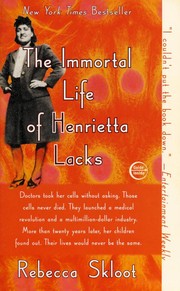
The Immortal Life of Henrietta Lacks
Rebecca Skloot
Blends a family's intimate suffering with the consequential scientific history created from one woman's cells.
Pick this if you appreciated Kolker’s emphasis on how scientific developments reshape a family’s fate and want another narrative that ties one woman’s bodily experience to consequential research and policy.
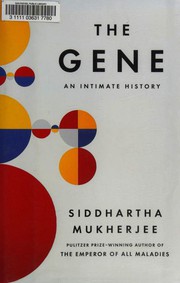
The Gene
Siddhartha Mukherjee
Connects genetics history to personal family vulnerability, illuminating how inheritance shapes identity, illness, and fate.
Pick this if you want a readable, big-picture history of genetics to place the Vanishing Family’s story in a wider scientific context rather than another single-family saga.

Brain on Fire
Susannah Cahalan
A propulsive medical mystery about personality loss, diagnostic uncertainty, family devotion, and eventual scientific clarity.
Pick this if you were drawn to the dramatic, sudden personality changes and diagnostic uncertainty in Kolker’s book; this offers a propulsive investigative account of a patient whose symptoms masqueraded as psychiatric illness.

The Great Pretender
Susannah Cahalan
Investigates psychiatry's scientific foundations through gripping reporting, disputed diagnoses, and the human costs of uncertainty.
Pick this if you want more investigative reporting about disputed diagnoses, scientific controversies, and the human costs when medicine’s foundations are uncertain.
At a glance
These matches were chosen for three overlapping dimensions reflected in Kolker’s book: intimate family storytelling under genetic threat, clear explanation of biomedical research, and reporting that ties laboratory discovery to patient experience and ethical consequences. Percent matches indicate how many of those dimensions each title shares.
| Book | First published | Pages | Closest match on | Match |
|---|---|---|---|---|
Hidden Valley Road Robert Kolker | 2020 | 400 | Family-centered investigation | 98% |
Mercies in Disguise Gina Kolata | 2017 | 262 | Family & genetic discovery | 96% |
The Family That Couldn't Sleep D. T. Max | 2006 | 299 | Prion disease detective work | 95% |
The Family Gene Joselin Linder | 2017 | 134 | Personal genetic investigation | 93% |
A Fatal Inheritance Lawrence Ingrassia | 2015 | 197 | Multigenerational inheritance | 92% |
The Immortal Life of Henrietta Lacks Rebecca Skloot | 2009 | 381 | Science meets family history | 89% |
The Gene Siddhartha Mukherjee | 2016 | 605 | Genetics explained clearly | 87% |
Brain on Fire Susannah Cahalan | 2012 | 288 | Medical mystery & personality loss | 84% |
The Great Pretender Susannah Cahalan | 2019 | 408 | Psychiatry’s contested science | 82% |
About The Vanishing Family
The Vanishing Family (2026) is a nonfiction narrative by Robert Kolker, subtitled Love, Fate, and the Quest to End Dementia. It follows a Pennsylvania family of nine siblings with hereditary frontotemporal dementia and traces the scientific hunt for the disease’s cause and a cure. Kolker is also the author of Hidden Valley Road.
Frequently asked questions
How similar is Hidden Valley Road to The Vanishing Family?+
Very similar in approach: both are Robert Kolker investigations that combine intimate portraits of a single family living with inherited neuropsychiatric illness with deep reporting on the scientists and institutions trying to understand it.
I want more books about families confronting inherited neurological disease — where should I start?+
Start with Mercies in Disguise and The Family That Couldn't Sleep; both center families facing devastating inherited neurological disorders and follow the parallel arc of scientific discovery and clinical consequence.
Are there recommendations here that focus mainly on the science rather than family life?+
Yes. The Gene provides a broad history of genetics that contextualizes inheritance and identity, while The Family That Couldn't Sleep and Mercies in Disguise weave laboratory discovery tightly into the narrative so the science takes a central role alongside the family story.
Do any of these books explore ethical questions about research and patients the way Kolker does?+
Yes. The Immortal Life of Henrietta Lacks and The Great Pretender both interrogate the ethical dimensions of medical research and how scientific practices affect families and individuals, though they focus on different historical and disciplinary contexts.
Are any of these choices memoirs or fiction?+
No. All nine recommendations here are nonfiction reportage or narrative nonfiction; none are fiction or personal memoirs outside the reporting tradition.
Want recommendations based on your own favorites?
BookTwin can match you to books by mood, pacing, themes, and emotional payoff — based on 1 to 5 books you tell it you loved.
Try BookTwin