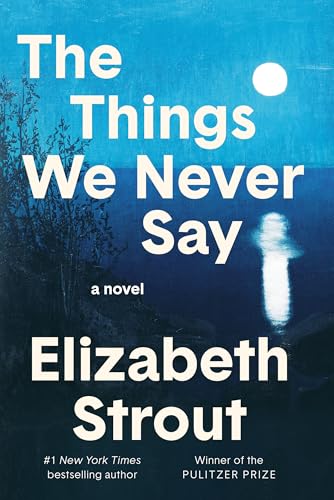
Books Like The Things We Never Say
by Elizabeth Strout
The Things We Never Say centers on a precise, interior unraveling: Artie Dam, a Massachusetts Bay–born history teacher who seems to lead an ordinary life after three decades of marriage, discovers a secret life that forces him to reassess who he is and what his closest relationships have actually meant. The novel works as a contained moral and emotional excavation — quiet scenes of daily routine, the physical detail of sailing, and the slow accrual of small facts that, once reinterpreted, knock a familiar world off balance.
Readers will arrive at this book for different reasons: some will be drawn to the long-married couple at its heart and the way long habit masks deep separations; others will respond to the book’s tone of reserve, the restrained but sharp reckonings that follow an unveiled secret; and some will be interested in Artie’s particular solitude — a life outwardly ordinary until an intimate revelation obliges him to reconsider truth, memory and loyalty. The selections below are organized by which of those elements they share with Strout’s novel.
Recommended for fans of The Things We Never Say
Olive Kitteridge
Elizabeth Strout
Quiet, sharp portraits of marriage, aging, and buried tensions in a small town.
Pick this if you appreciated the close, slice-of-life scenes and clear-eyed attention to long marriage; Olive Kitteridge matches that precise domestic scrutiny.
Our Souls at Night
Kent Haruf
Two older people confront loneliness and companionship with gentle, emotional clarity.
Pick this if you want a spare, tender look at loneliness and later-life companionship; this is one of the gentlest tonal matches on the list.
Gilead
Marilynne Robinson
Meditative, epistolary reflection on life, memory, and intimate relationships.
Pick this if you liked the introspective, reflective narration that lingers on memory and small moral details — this is a similarly meditative, personal account.
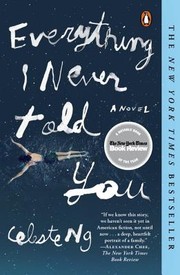
Everything I Never Told You
Celeste Ng
Family secret unravels, exposing intimacy, expectations, and hidden lives.
Pick this if it was the unspooling family secret and its interpersonal consequences that gripped you — this novel likewise centers a household’s disintegration and aftermath.

The Remains of the Day
Kazuo Ishiguro
A restrained narrator reckons with lost emotional life and suppressed truths.
Pick this if you were drawn to a narrator who conceals and then faces emotional truth; this book shares that restrained, elegiac posture.

A Man Called Ove
Fredrik Backman
Curmudgeonly protagonist's solitude shattered by revelations and newfound connections.
Pick this if you responded to Artie’s solitude being disrupted and want a slightly more comedic, redemptive take on a crotchety protagonist finding new bonds.
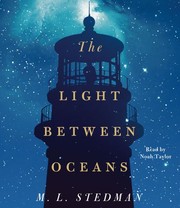
The Light Between Oceans
M.L. Stedman
Moral consequences of a hidden decision that fractures relationships and identity.
Pick this if you were most interested in how a hidden decision reshapes identity and relationships; expect an inward moral reckoning rather than melodrama.
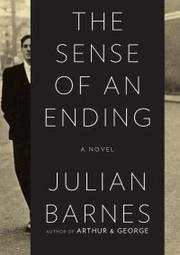
The Sense of an Ending
Julian Barnes
An ordinary life revisited reveals overlooked actions and uneasy reckonings.
Pick this if you like a quiet narrator revisiting ordinary events and discovering new meanings — this work mirrors that sober, reflective lens.
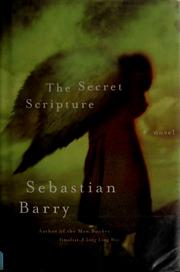
The Secret Scripture
Sebastian Barry
A woman's hidden past unfolds through memory, secrecy, and emotional truth.
Pick this if you were drawn to secrets surfacing through memory and testimony; this book explores longevity, secrecy and the emotional cost of revelation.
At a glance
Matches were chosen on emotional and structural grounds: restrained, inward narration; late‑life or long‑marriage reckonings; the thematic power of a revealed secret; and a quiet, observational prose that registers shifting intimacies rather than melodrama.
| Book | First published | Pages | Closest match on | Match |
|---|---|---|---|---|
Olive Kitteridge Elizabeth Strout | 2007 | 288 | Sharp marriage portraits | 92% |
Our Souls at Night Kent Haruf | 2015 | 192 | Quiet companionship reckonings | 89% |
Gilead Marilynne Robinson | 2004 | 257 | Meditative interior voice | 88% |
Everything I Never Told You Celeste Ng | 2014 | 297 | Family secret dynamics | 87% |
The Remains of the Day Kazuo Ishiguro | 1989 | 256 | Restraint & withheld emotion | 86% |
A Man Called Ove Fredrik Backman | 2017 | 24 | Curmudgeon-to-connection arc | 85% |
The Light Between Oceans M.L. Stedman | 2012 | 352 | Moral aftermath of choices | 84% |
The Sense of an Ending Julian Barnes | 2011 | 154 | Memory & ordinary life revisited | 83% |
The Secret Scripture Sebastian Barry | 2008 | 300 | Hidden pasts revealed | 82% |
About The Things We Never Say
The Things We Never Say is a standalone novel and a deliberate departure from Elizabeth Strout’s interconnected fictional worlds. Its plot follows Artie Dam, a history teacher and sailor in Massachusetts Bay, whose discovery of a secret life forces him to rethink his marriage and closest relationships.
Frequently asked questions
Is The Things We Never Say linked to Elizabeth Strout’s other novels?+
No. This is a standalone novel and a purposeful departure from her interconnected fictional world; it does not continue or directly reference those earlier linked characters.
Which Strout book feels most similar in tone?+
Olive Kitteridge is the closest match on this list: both offer sharp, compact portraits of marriage, aging and the slow accumulation of small betrayals or disappointments.
Does the story focus more on the secret itself or on the aftermath?+
The novel concentrates on the aftermath — how Artie and the people around him reinterpret their shared history once the secret is known, using quiet scenes and interior reflection rather than sensationalism.
Is this a fast, plot-driven read?+
No. Like much of Strout’s work, it is character-driven and measured: the momentum comes from psychological shifts and revealed meanings, not from plot action.
Will this appeal to readers who like moral ambiguity?+
Yes. The book frames choices and loyalties without simple judgment, inviting readers to sit with complexity rather than resolve it neatly.
Want recommendations based on your own favorites?
BookTwin can match you to books by mood, pacing, themes, and emotional payoff — based on 1 to 5 books you tell it you loved.
Try BookTwin