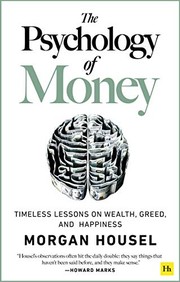
Books Like The Psychology of Money
by Morgan Housel
The Psychology of Money is less a how-to manual than a portrait of how people actually behave with money: short, tightly written essays that stitch together history, psychology and personal anecdote to argue that reasonable decisions and long time horizons beat intelligence and complexity. Morgan Housel's defining moves are conversational plainness, memorable stories (from everyday households to market crashes) and a focus on temperament — patience, humility and the ability to accept uncertainty — rather than on formulas or stock tips.
Readers reach for books like this for very different reasons. Some want the behavioral foundations that explain why people misjudge risk and reward; others want frameworks for building resilience to volatility; and some simply enjoyed Housel's compact, anecdote-driven style and are looking for more readable summaries of cognitive bias and decision architecture. The nine recommendations below are organized by which of those elements they echo most closely, with frank notes where a book matches tone but not method, or theory but not practical steps.
Recommended for fans of The Psychology of Money

Thinking, Fast and Slow
Daniel Kahneman
Foundational behavioral psychology explaining judgment and decision biases.
Pick this if you want the deep behavioral-psychology framework (System 1/2) that explains many of Housel's claims; this is the most rigorous psychological underpinning here.
Nudge
Richard H. Thaler
Shows how small choice architecture changes improve financial decisions.
Pick this if you liked Housel's focus on small behavioral levers and want a book showing how choice architecture can improve financial and everyday decisions.
Misbehaving
Richard H. Thaler
History and evidence of behavioral economics applied to markets and finance.
Pick this if you want the institutional and personal stories that turned behavioral economics into a field; this book traces experiments and market examples in ways that illuminate Housel's claims.
Fooled by Randomness
Nassim Nicholas Taleb
Explores luck versus skill and how randomness skews perception of outcomes.
Pick this if you appreciated Housel's insistence that luck matters and want a shorter, sharper examination of how randomness distorts our reading of success and failure.
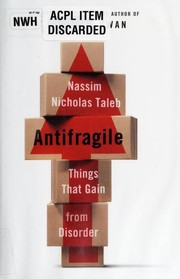
Antifragile
Nassim Nicholas Taleb
Framework for benefiting from volatility, uncertainty, and financial shocks.
Pick this if you want a conceptual framework for how to benefit from disorder and uncertainty rather than just endure it — a broader, more philosophical complement to Housel's practical cautions.
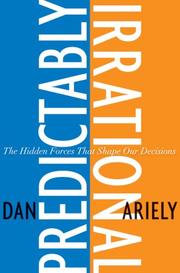
Predictably Irrational
Dan Ariely
Entertaining experiments revealing systematic irrationalities in human choices.
Pick this if you enjoyed Housel's anecdotal method and want more entertaining, experiment-based demonstrations of systematic irrationalities in decision-making.

The Art of Thinking Clearly
Rolf Dobelli
Short chapters on common cognitive errors that affect money decisions.
Pick this if you liked concise chapters each named for a single bias or error; this book offers short, standalone reads that echo Housel's accessible style.

The Simple Path to Wealth
J. L. Collins
Clear, no-nonsense investing and wealth-building advice for practical action.
Pick this if you want plain, actionable guidance on savings and long-term investing that pairs well with Housel's behavioral framing — practical steps to apply while you attend to temperament.
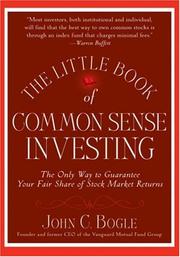
The Little Book of Common Sense Investing
John C. Bogle
Classic case for low-cost index investing and long-term thinking.
Pick this if you want a clear, evidence-based case for low-cost, long-term index investing as the simplest route to align behavior with good financial outcomes.
At a glance
These matches were chosen on three concrete dimensions that dominate Housel's book: behavioral foundations (how people think and err), prescriptions for coping with uncertainty (practical rules and resilience), and narrative style (short essays, anecdotes, or experiment-based examples). The percentage reflects overlap across those dimensions, not exact topic or investment advice.
| Book | First published | Pages | Closest match on | Match |
|---|---|---|---|---|
Thinking, Fast and Slow Daniel Kahneman | 2011 | 528 | Foundational cognitive theory | 95% |
Nudge Richard H. Thaler | 2008 | 312 | Choice architecture ideas | 90% |
Misbehaving Richard H. Thaler | 2015 | 432 | Behavioral economics history | 89% |
Fooled by Randomness Nassim Nicholas Taleb | 2001 | 312 | Luck vs. skill perspective | 88% |
Antifragile Nassim Nicholas Taleb | 2012 | 639 | Thriving on volatility | 85% |
Predictably Irrational Dan Ariely | 2008 | 368 | Engaging experiment stories | 84% |
The Art of Thinking Clearly Rolf Dobelli | 2013 | 384 | Brief cognitive primers | 80% |
The Simple Path to Wealth J. L. Collins | 2000 | 289 | Straightforward investing rules | 78% |
The Little Book of Common Sense Investing John C. Bogle | 2007 | 228 | Index-investing case | 76% |
About The Psychology of Money
Morgan Housel's The Psychology of Money (first published in 2020) collects short essays about the behavioral side of personal finance and investing. It has been widely cited for translating academic findings and historical episodes into everyday lessons about risk, savings, and the role of luck.
Frequently asked questions
Is The Psychology of Money academic or practical?+
It leans toward practical interpretation of academic ideas: Housel doesn't present formal models or equations but distills behavioral research and historical episodes into rules of thumb about saving, risk and time horizon.
Which of these will teach me behavioral economics rigorously?+
For foundational theory and experiments, start with Thinking, Fast and Slow; it lays out System 1/2 thinking that underpins many of Housel's observations. Several other picks translate those foundations into finance-focused examples.
Which recommendations give concrete financial rules?+
If you want clear, actionable investing guidance alongside behavioral context, The Simple Path to Wealth and The Little Book of Common Sense Investing are the most practically focused among these recommendations.
Are there books here about market randomness and luck?+
Yes. Fooled by Randomness directly tackles luck versus skill in markets, while Antifragile offers a broader framework for benefiting from volatility — both complement Housel's frequent warnings about overattributing success to skill.
I liked Housel's short, anecdotal chapters—where else should I look?+
Thinking, Fast and Slow and Predictably Irrational use experiment-driven stories, while The Art of Thinking Clearly and Misbehaving offer short, digestible chapters on cognitive errors and market behavior that mirror Housel's essay-friendly rhythm.
Want recommendations based on your own favorites?
BookTwin can match you to books by mood, pacing, themes, and emotional payoff — based on 1 to 5 books you tell it you loved.
Try BookTwin