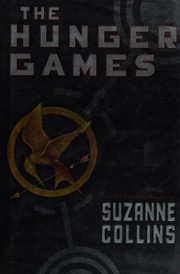
Books Like The Hunger Games
by Suzanne Collins
The Hunger Games is built around a single, brutal conceit that organizes everything else: a state-sponsored spectacle in which youths are forced to fight to the death while the nation watches. That arena framework creates a constant calculation of survival tactics (weapon use, alliances, public image), a logistics-driven tension (supplies, sponsors, timing) and an immediate political aftershock — the Games are both punishment and propaganda. Suzanne Collins couples that structure with a spare, first-person present-tense voice that keeps readers inside Katniss Everdeen’s tactical thinking and emotional restraint.
Readers arrive at similar books for different reasons: some want the violent, last-person-standing pressure of the arena; others want a dystopian society whose rules reveal a larger political rot; some are after a fast, breathless plot with moral gray zones and hard choices; and many want a resourceful teenage protagonist whose decisions can spark something bigger. The nine picks below call out which element of Collins’s novel they echo most — from near-identical concepts of televised death matches to quieter, more satirical takes on social control — so you can match your next read to what actually hooked you.
Recommended for fans of The Hunger Games
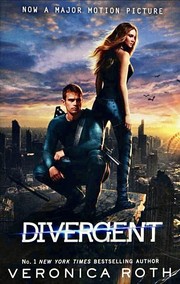
Divergent
Veronica Roth
Fast-paced YA dystopia with factioned society, deadly tests, and a rebellious heroine.
Pick this if you wanted another YA dystopia where the social order is split into factions and a young woman must make survival-driven moral choices; this is very close in tone and structure.
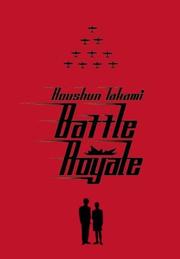
Battle Royale
Koushun Takami
Brutal last-person-standing contest among teenagers, tense atmosphere and societal critique.
Pick this if you want the rawest match to the Hunger Games’ core conceit — teenagers forced into a televised, lethal contest that functions as social commentary. Content is much darker and more graphic.
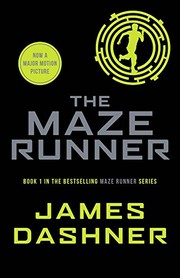
The Maze Runner
James Dashner
High-stakes survival, mystery trial environment, and tight group dynamics under pressure.
Pick this if the trial-as-environment and intense, puzzle-like survival dynamics are what gripped you. Expect a tighter mystery setup and group dynamics under constant threat.
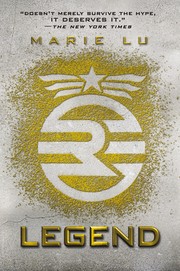
Legend
Marie Lu
Dual-perspective YA dystopia with chase, political conspiracy, and strong chemistry.
Pick this if you liked the political conspiracy and a fast-moving chase. This shares the dual-trajectory tension (pursuit plus politics) and a strong chemistry-driven plot element.
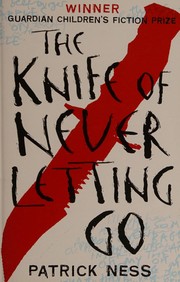
The Knife of Never Letting Go
Patrick Ness
Relentless pacing, young hero fleeing oppressive forces, and moral ambiguity.
Pick this if you wanted breathless pacing and a young hero constantly fleeing and reacting under pressure, with moral choices that aren’t clearly black-and-white.
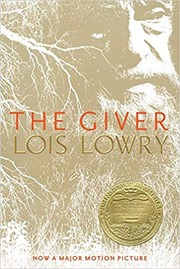
The Giver
Lois Lowry
Quietly unnerving controlled society, moral awakening, and youth protagonist questioning order.
Pick this if it was the unnerving, ordered society and the protagonist’s moral awakening that engaged you. This is quieter and more reflective, trading arena spectacle for subtle social critique.
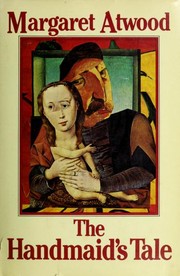
The Handmaid's Tale
Margaret Atwood
Chilling authoritarian society, female survival under oppression, and sharp political themes.
Pick this if it was the breathless manhunt and political stakes you wanted more of. This delivers relentless tempo and a resourceful protagonist, though it operates without the Games’ televised spectacle.
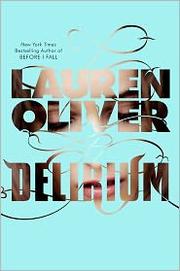
Delirium
Lauren Oliver
Romantic, emotionally driven dystopia about forbidden love and societal control.
Pick this if you were primarily drawn to the forbidden-romance thread within a repressive system. This leans more into emotional romance than televised spectacle, so it’s a partial match.

Feed
M.T. Anderson
Satirical near-future YA with consumerist control, teenage voices, and grim social commentary.
Pick this if you appreciated Collins’s commentary on consumerism and media manipulation. This is a sharper, satirical take on corporate/consumer control told through teenage voices rather than an arena framework.
At a glance
Matches emphasize concrete elements: arena/contest structure, youth perspective and first-person immediacy, overt political control, and the novel’s focus on survival tactics and public perception. Percentages reflect how many of those dimensions each pick shares.
| Book | First published | Pages | Closest match on | Match |
|---|---|---|---|---|
Divergent Veronica Roth | 2010 | 487 | Factioned society & tests | 93% |
Battle Royale Koushun Takami | 1999 | 624 | Teen death‑match premise | 92% |
The Maze Runner James Dashner | 2009 | 375 | Closed survival maze | 90% |
Legend Marie Lu | 2011 | 313 | Dual viewpoint & pursuit | 88% |
The Knife of Never Letting Go Patrick Ness | 2008 | 496 | Relentless chase & ambiguity | 87% |
The Giver Lois Lowry | 1993 | 200 | Controlled society, quiet dread | 85% |
The Handmaid's Tale Margaret Atwood | 1985 | 352 | Fast-paced political thriller | 84% |
Delirium Lauren Oliver | 2011 | — | Romantic control theme | 82% |
Feed M.T. Anderson | 2002 | 299 | Satirical social critique | 80% |
About The Hunger Games
The Hunger Games was published in 2008 as the first book of Suzanne Collins’s trilogy. Collins drew on reality-TV mechanics and historical references to craft the Games as both spectacle and social control; the novel became a defining YA dystopia and led to a major film adaptation and a later prequel by Collins.
Frequently asked questions
What comes next after The Hunger Games in the series?+
The Hunger Games is Book One of a trilogy; the direct sequels continue Katniss’s story and the escalating political conflict. Suzanne Collins also wrote a prequel, The Ballad of Songbirds and Snakes, which returns to the Games’ early history.
Are there other Suzanne Collins books like The Hunger Games?+
Collins’s earlier work includes The Underland Chronicles, a middle-grade fantasy quartet with a young protagonist facing large-scale conflict; it shares a focus on moral choice under pressure although its setting and tone differ from the Games.
Which picks here are closest to the arena concept?+
Battle Royale is the closest match, sharing the last-person-standing contest among teens and the resulting societal critique. Divergent and The Maze Runner also replicate the high-stakes, trial-like environments but with different ideological setups.
Are these books appropriate for teen readers?+
Most entries are young-adult novels and are written for teen readers, though some — notably Battle Royale and The Handmaid’s Tale — contain graphic or mature political content and may be better suited to older teens or adults.
I liked Katniss’s tactical POV. Which is best for that?+
Pick titles that keep the narrative tight on a single protagonist’s perceptions: Divergent, The Maze Runner and The Knife of Never Letting Go emphasize urgent, close-point-of-view survival and decision-making in pressured settings.
More books by Suzanne Collins
Want recommendations based on your own favorites?
BookTwin can match you to books by mood, pacing, themes, and emotional payoff — based on 1 to 5 books you tell it you loved.
Try BookTwin