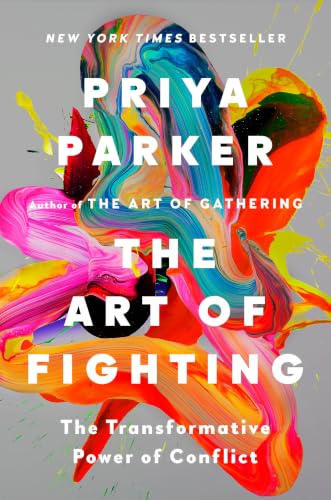
Books Like The Art of Fighting
by Priya Parker
The Art of Fighting is a pragmatic defense of what most modern advice treats as a problem: conflict. Priya Parker reframes disagreement as an engine of deeper connection, offering a taxonomy for when a fight is necessary, how to structure it, and when walking away is the right choice. The book mixes facilitation techniques, decision rules for whether to engage, and tools for steering high-stakes conversations so they produce repair and growth rather than retreat.
Readers come to The Art of Fighting for different reasons: some want concrete scripts and stepwise methods to manage family or workplace disputes; others are after the larger idea that conflict can create intimacy when designed well; and some will appreciate the book’s blend of facilitation experience and original research. The nine titles below are selected to match those specific needs — from tactical conversation frameworks and negotiation principles to emotional skill-building and team-level conflict design — with notes on where each pick most closely overlaps with Parker’s approach.
Recommended for fans of The Art of Fighting
Difficult Conversations
Douglas Stone, Bruce Patton, and Sheila Heen
Practical tools turn emotionally charged disagreements into clearer, more constructive conversations.
Pick this if you want clear, reproducible techniques for navigating emotionally charged exchanges — this book gives turn-by-turn phrasing and listening strategies that pair well with Parker’s higher-level decision rules.

Fight Right
Julie Schwartz Gottman and John Gottman
Shows couples how conflict, handled skillfully, can build intimacy and resilience.
Pick this if your primary concern is sustaining intimacy through disagreement; this book focuses specifically on relationship mechanics and exercises that build trust while disputing.
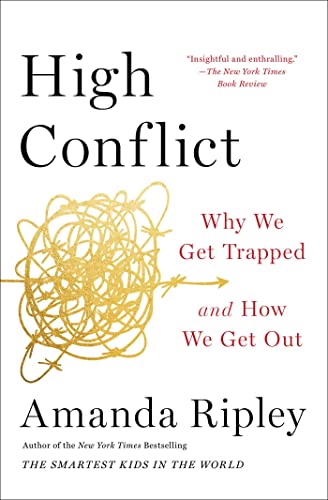
High Conflict
Amanda Ripley
Explores why disputes become destructive and how people escape entrenched cycles of hostility.
Pick this if you need to diagnose when conflict has become destructive and learn pathways out of entrenched hostility; this explains the dynamics Parker warns about and offers ways to disengage or reframe.

Nonviolent Communication
Marshall B. Rosenberg
Offers a compassionate framework for expressing needs, hearing others, and navigating disagreement.
Pick this if you want a compassionate vocabulary for expressing needs and feelings during fights — practical phrasing that helps keep connection intact while addressing real friction.
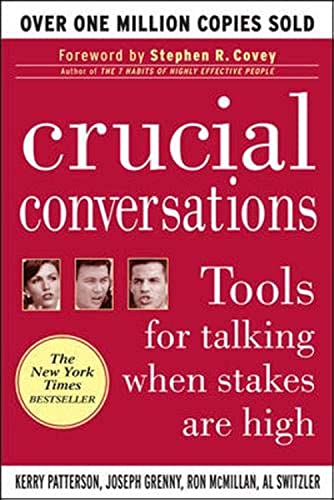
Crucial Conversations
Kerry Patterson, Joseph Grenny, Ron McMillan, and Al Switzler
Provides actionable methods for discussing high-stakes issues when emotions and opposing views collide.
Pick this if you need stepwise techniques for discussing important, emotionally loaded issues; this emphasizes how to structure the interaction so decisions are reachable under pressure.
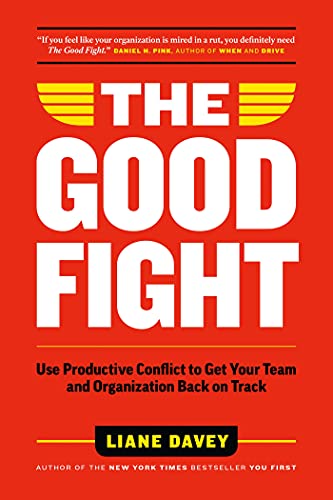
The Good Fight
Liane Davey
Reframes workplace disagreement as essential to stronger decisions, healthier teams, and genuine collaboration.
Pick this if you're dealing with workplace disagreement and want a mindset shift that treats dissent as essential to better decisions — it complements Parker’s facilitation tactics with team-focused practices.
Getting to Yes
Roger Fisher, William Ury, and Bruce Patton
A foundational guide to resolving disputes through principled negotiation rather than avoidance or domination.
Pick this if your fights are about concrete outcomes or resources and you want negotiation tools that avoid zero-sum thinking; this gives a principled framework for reaching agreements rather than simply airing grievances.
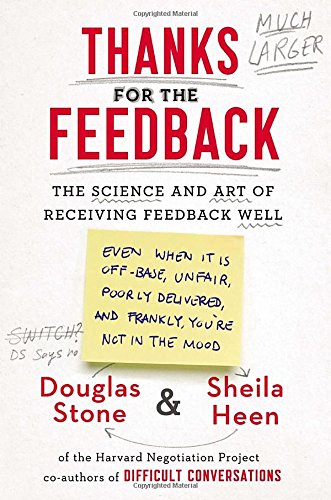
Thanks for the Feedback
Douglas Stone and Sheila Heen
Explains how to receive difficult feedback without defensiveness, strengthening growth and relationships.
Pick this if you struggle with defensiveness when criticized and want practical ways to process and use feedback constructively — useful when Parker’s methods require people to hear hard truths.
The Dance of Connection
Harriet Lerner
Helps readers speak honestly, set limits, and remain connected during difficult relationship conversations.
Pick this if you need help speaking plainly, setting limits, and staying connected in relationships; this provides psychological framing and scripts for maintaining connection while being firm.
At a glance
Matches were chosen on three dimensions central to Parker’s book: practical, actionable tools for moments of conflict; frameworks for deciding whether and how to engage; and application level (individual relationships, couples, teams, or public/organizational conversations).
| Book | First published | Pages | Closest match on | Match |
|---|---|---|---|---|
Difficult Conversations Douglas Stone, Bruce Patton, and Sheila Heen | 1999 | 250 | Tactical conversation skills | 97% |
Fight Right Julie Schwartz Gottman and John Gottman | 2024 | — | Couples conflict skills | 96% |
High Conflict Amanda Ripley | 2021 | 368 | Escalation and exit strategies | 94% |
Nonviolent Communication Marshall B. Rosenberg | 1999 | 227 | Needs-based communication | 93% |
Crucial Conversations Kerry Patterson, Joseph Grenny, Ron McMillan, and Al Switzler | 2001 | 272 | High-stakes conversation methods | 92% |
The Good Fight Liane Davey | 2018 | 368 | Team conflict reframing | 90% |
Getting to Yes Roger Fisher, William Ury, and Bruce Patton | 1981 | 200 | Principled negotiation | 89% |
Thanks for the Feedback Douglas Stone and Sheila Heen | 2014 | 348 | Receiving tough feedback | 87% |
The Dance of Connection Harriet Lerner | 2001 | 272 | Honest relational boundary work | 86% |
About The Art of Fighting
The Art of Fighting is a nonfiction New York Times bestseller by Priya Parker, subtitled The Transformative Power of Conflict. Parker argues that conflict is not the opposite of connection and that, handled skillfully, it deepens relationships; the book draws on two decades of her facilitation work and original research to show when and how to engage disputes.
Frequently asked questions
Which book should I read if I want step-by-step tools for a hard conversation?+
Start with Difficult Conversations for granular, tactical techniques that turn charged moments into clearer exchanges; Parker’s book complements it by situating those techniques inside a broader decision framework about whether to fight at all.
I want guidance specific to romantic relationships — which pick is best?+
Fight Right is written for couples and focuses on conflict practices that build intimacy and resilience; it aligns closely with Parker when your fights are between partners rather than in groups or organizations.
Which recommendation helps when disputes have become destructive and entrenched?+
High Conflict examines why disputes escalate and offers escape routes from cycles of hostility; pair it with Parker’s facilitation-guided steps to both understand escalation and redesign how people engage.
Is there a resource that teaches compassionate phrasing and needs-based expression?+
Nonviolent Communication provides a practical language for naming needs and feelings, a skill that fits neatly into Parker’s toolkit for conducting fights that deepen connection rather than erode it.
Want recommendations based on your own favorites?
BookTwin can match you to books by mood, pacing, themes, and emotional payoff — based on 1 to 5 books you tell it you loved.
Try BookTwin