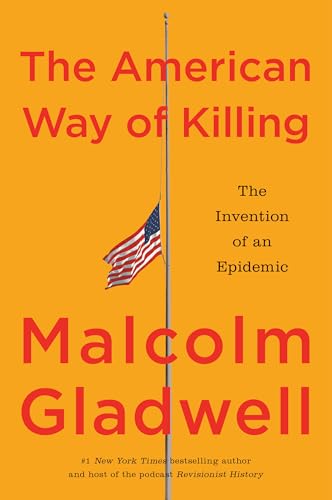
Books Like The American Way of Killing
by Malcolm Gladwell
The American Way of Killing is a narrative-argument nonfiction book that treats America’s gun problem as an historical and institutional puzzle. Gladwell threads together individual stories — a young gunshot victim in Washington, D.C., a seventeenth‑century English knight whose legal legacy influences U.S. firearms law, and a European police chief baffled at an American police academy — to show how policy choices, institutional incentives and cultural assumptions produced an “epidemic” that wealthy societies elsewhere avoid. The structure alternates close, character-driven scenes with wide-angle historical explanation so each anecdote illuminates a larger causal claim.
If you connected with Gladwell’s book for its method, there are at least three reasons you might be looking for more: you want other deeply reported single-case probes that reveal systemic failure; you want narrative nonfiction that traces corporate, legal or bureaucratic responsibility over decades; or you want rigorous storytelling that makes policy history readable for general audiences. The nine titles below were chosen to match those specific moves — immersive reporting, institutional diagnosis, and moral urgency — and each note tells you exactly which of those elements it shares with Gladwell and where it diverges.
Recommended for fans of The American Way of Killing
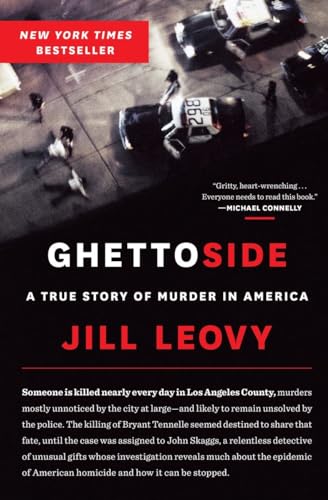
Ghettoside
Jill Leovy
Investigates American gun violence through one murder, revealing institutional failure and the human cost of unsolved killings.
Pick this if you want a single, deeply reported murder case to show how policing, prosecutors and the courts fail a community and produce systemic violence.

Dopesick
Beth Macy
Explains an American-made epidemic through intimate stories, corporate misconduct, policy failures, and devastated communities.
Pick this if you want a narrative that traces how corporate behavior, regulatory gaps and policy decisions together produced a public‑health disaster — a model for explaining an epidemic through institutions.
Evicted
Matthew Desmond
Uses immersive family stories to expose how housing instability perpetuates poverty in prosperous America.
Pick this if you were drawn to Gladwell’s attention to institutions and want a book that uses family-level stories to reveal how housing policy and eviction perpetuate poverty and instability.
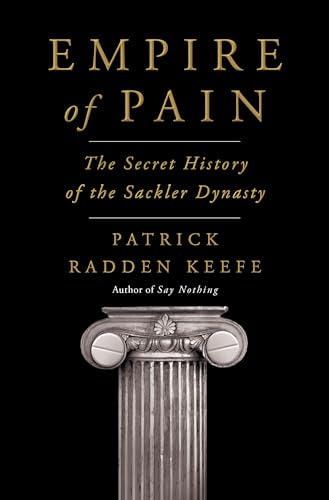
Empire of Pain
Patrick Radden Keefe
Traces the personalities, institutions, and incentives behind a preventable epidemic that resisted accountability.
Pick this if you prefer long-term, intimate reporting that follows individuals over years to show how bureaucracy, homelessness and poverty interact to limit life chances.
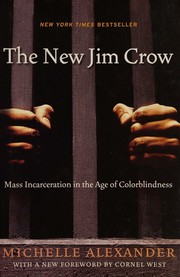
The New Jim Crow
Michelle Alexander
Connects law, policing, and incarceration to the persistence of racial inequality across modern America.
Pick this if you want a meticulous, narrative account of personalities, family businesses and institutional incentives that together explain a preventable epidemic of death and suffering.
American Prison
Shane Bauer
Combines undercover reporting and history to show how profit shaped brutal American penal institutions.
Pick this if you want investigative reporting that connects contemporary institutional brutality to profit motives and administrative choices inside American penal systems.
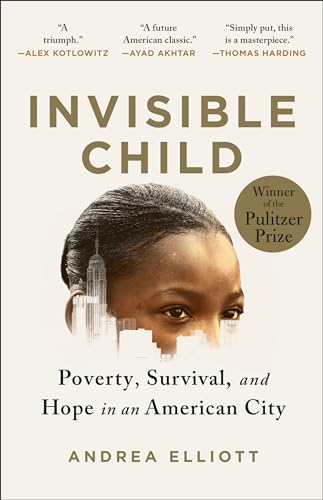
Invisible Child
Andrea Elliott
Follows one New York family while examining homelessness, poverty, bureaucracy, and failed systems of support.
Pick this if you want a portrait of how social‑service bureaucracies, homelessness and poverty shape a single child’s life as a way to understand system-level failure.

Random Family
Adrian Nicole LeBlanc
Chronicles intertwined lives to reveal how poverty, drugs, incarceration, and unstable institutions constrain American families.
Pick this if you’re looking for multi‑family, multi‑year immersion that reveals how drugs, incarceration and unstable institutions constrain families — similar methodological ambition to Gladwell’s human-centered institutional storytelling.
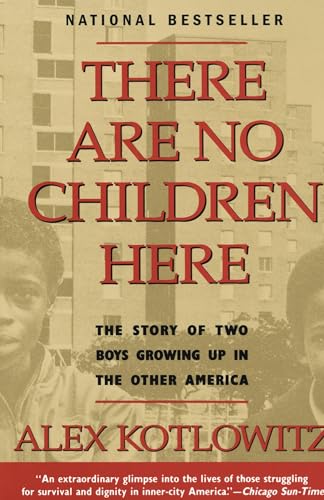
There Are No Children Here
Alex Kotlowitz
Follows two brothers through public housing, illuminating violence, segregation, neglect, and endangered childhood.
Pick this if you want a short, compassionate account of how violence, segregation and neglect affect childhood, useful if Gladwell’s human stories were the part you valued most.
At a glance
Matches were chosen for how they combine immersive reporting with institutional analysis: close, human-centered scenes that feed into a structural argument about law, policy, corporations or bureaucracy. Books that prioritize courtroom history, long-form immersion, or clear institutional tracing rank higher here.
| Book | First published | Pages | Closest match on | Match |
|---|---|---|---|---|
Ghettoside Jill Leovy | 2015 | 384 | Case-driven policing critique | 96% |
Dopesick Beth Macy | 2018 | 400 | Corporate-epidemic narrative | 94% |
Evicted Matthew Desmond | 2016 | 448 | Housing as structural force | 93% |
Empire of Pain Patrick Radden Keefe | 2021 | 720 | Family-focused ethnography | 92% |
The New Jim Crow Michelle Alexander | 2000 | 301 | Large-scale institutional tracing | 90% |
American Prison Shane Bauer | 2018 | 368 | Law, prisons, profit | 89% |
Invisible Child Andrea Elliott | 2021 | 640 | Bureaucracy and childhood | 89% |
Random Family Adrian Nicole LeBlanc | 2003 | 432 | Interwoven lives reporting | 87% |
There Are No Children Here Alex Kotlowitz | 1991 | 323 | Children in violent environments | 86% |
About The American Way of Killing
The American Way of Killing is a nonfiction narrative argument by Malcolm Gladwell, published September 2026 and subtitled The Invention of an Epidemic. Gladwell is the author of Talking to Strangers and Revenge of the Tipping Point. The book uses individual stories plus legal and institutional history to ask why the United States, unlike other rich nations, developed such severe gun-violence problems.
Frequently asked questions
Which book should I read next to understand the institutional causes of American violence?+
Start with Ghettoside for a clear case study that connects one unsolved murder to broader police and legal failures, or Empire of Pain if you want a parallel account of corporate and institutional responsibility in a preventable epidemic.
I liked the mix of storytelling and public-policy history — what matches that balance?+
Dopesick and Empire of Pain both use intimate personal stories to anchor wide investigative reporting about policy failures and powerful institutions. Evicted and Invisible Child do the same but focus more on how bureaucracies and housing policy shape everyday vulnerability.
Are there books here that use undercover reporting or immersion like Gladwell’s anecdotes?+
Yes. American Prison relies on immersive, on-the-ground reporting to expose how profit and management choices create cruelty in U.S. penal institutions; Random Family and Invisible Child use long-form immersion to trace families over years.
Which of these books most directly engages race and policing as structural problems?+
Ghettoside zeroes in on policing and unsolved homicide; The New Jim Crow provides a sweeping legal and historical framework connecting law, mass incarceration and racial inequality. Both will deepen the themes Gladwell raises.
Want recommendations based on your own favorites?
BookTwin can match you to books by mood, pacing, themes, and emotional payoff — based on 1 to 5 books you tell it you loved.
Try BookTwin