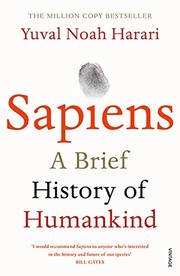
Books Like Sapiens: A Brief History of Humankind
by Yuval Noah Harari
Sapiens is built on a simple formal move: take macrohistory as a single narrative and explain contemporary human institutions, beliefs and behaviors as emergent outcomes of cognitive, agricultural and scientific revolutions. Yuval Noah Harari combines wide-ranging synthesis — from evolutionary biology to economics to religion — with clear, often provocative theses (for example, that imagined orders like money or nations are human constructions). The book's tone mixes accessible popular science, philosophical asides and polemical judgments about where our species has succeeded and failed.
Readers come to Sapiens for different reasons: some want a sweeping chronology that condenses millennia into a few clarifying concepts; others loved Harari's readiness to ask ethical questions about biotechnology and inequality; and some simply appreciated the brisk, example-driven explanations that connect genes, markets and myths. The list below is organized by which of those elements each recommendation shares most closely — synthesis and explanation, future-oriented argument, data-driven reassessment, or readable scientific storytelling.
Recommended for fans of Sapiens: A Brief History of Humankind

Guns, Germs, and Steel
Jared Diamond
Macrohistorical analysis of how environment shaped civilizations and power balances.
Pick this if you wanted the same macrohistorical explanation of how geography and environment shaped civilizational power and inequality.
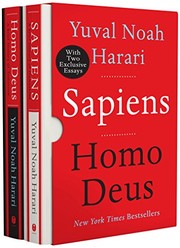
Homo Deus
Yuval Noah Harari
Harari's forward-looking take on humanity's future and technological ethics.
Pick this if you liked Harari's ethical speculation about technology and want his own, sustained argument about where humanity may be headed.
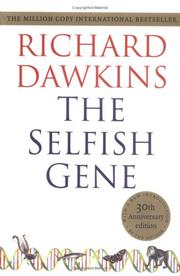
The Selfish Gene
Richard Dawkins
Gene-centered evolution explains human behavior and culture foundations.
Pick this if you appreciated the biological explanations in Sapiens and want a foundational, gene-focused account of behavior and evolution.

The Sixth Extinction
Elizabeth Kolbert
Compelling synthesis of human-driven mass extinction and environmental consequences.
Pick this if you want a rigorous, journalistic synthesis showing how human activity is producing a mass extinction and what that means for our history and future.

A Short History of Nearly Everything
Bill Bryson
Accessible, witty survey of big-science discoveries shaping our understanding of the world.
Pick this if you enjoyed the conversational, anecdotal explanations of complex science and want more readable surveys that connect discoveries to big questions.
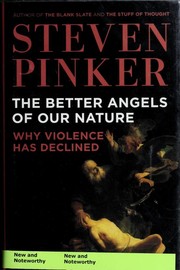
The Better Angels of Our Nature
Steven Pinker
Data-driven argument that violence declined across history and why.
Pick this if you appreciated evidence-based claims about human progress and want a data-rich argument that argues violence has actually declined over centuries.
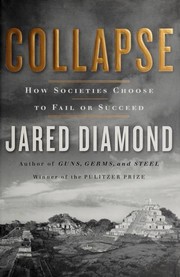
Collapse
Jared Diamond
Investigates why past societies fell and parallels to modern ecological risks.
Pick this if you were drawn to Sapiens' attention to structural risks and want case studies and comparative analysis of why past societies failed, and what that implies today.

The Origins of Political Order
Francis Fukuyama
Deep look at how institutions, states, and political systems evolved globally.
Pick this if you wanted a deeper, narrower look at how political institutions and state capacity evolved across regions — closer on institutions than on cultural or biological origins.
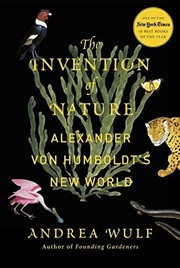
The Invention of Nature
Andrea Wulf
Biography showing how Humboldt's ideas reshaped science and our view of nature.
Pick this if you liked the way Sapiens connects scientific ideas to historical change and want a biographical account showing how one influential naturalist reshaped scientific views of nature.
At a glance
Matches were chosen for the same combination Sapiens uses: broad, cross-disciplinary synthesis; clear, non-technical prose; and a willingness to draw big normative conclusions from scientific and historical evidence.
| Book | First published | Pages | Closest match on | Match |
|---|---|---|---|---|
Guns, Germs, and Steel Jared Diamond | 1997 | 528 | Environmental causation focus | 95% |
Homo Deus Yuval Noah Harari | 2017 | — | Harari's future gaze | 93% |
The Selfish Gene Richard Dawkins | 1976 | 352 | Gene-centered explanation | 88% |
The Sixth Extinction Elizabeth Kolbert | 2014 | 352 | Human-driven environmental impact | 86% |
A Short History of Nearly Everything Bill Bryson | 2003 | 592 | Accessible science storytelling | 85% |
The Better Angels of Our Nature Steven Pinker | 2011 | 802 | Quantitative optimism/pessimism | 84% |
Collapse Jared Diamond | 2004 | 648 | Societal collapse parallels | 82% |
The Origins of Political Order Francis Fukuyama | 2011 | 608 | Institutions & political evolution | 79% |
The Invention of Nature Andrea Wulf | 2015 | 496 | Influence of naturalists | 77% |
About Sapiens: A Brief History of Humankind
Sapiens first appeared in Hebrew in 2011 and reached a global audience after its English translation in 2014. It made Harari an international public intellectual by reframing human history around three key revolutions (cognitive, agricultural, scientific) and by foregrounding long-term structural causes over individual biographies.
Frequently asked questions
What should I read after Sapiens to learn more about humanity's future?+
Read Homo Deus by Yuval Noah Harari for Harari's direct continuation: it shifts from history to projections about technology, artificial intelligence and the ethical questions those changes raise.
Which books give the same big-picture historical synthesis as Sapiens?+
Guns, Germs, and Steel and Collapse (both by Jared Diamond) offer large-scale environmental and institutional explanations for why societies develop differently; The Origins of Political Order examines institutional evolution in comparable breadth though with more focus on political structures.
I liked the data and optimism/pessimism in Sapiens — where next?+
For a data-driven, normative reassessment of long-term trends, The Better Angels of Our Nature argues that violence has declined using quantitative evidence; The Sixth Extinction uses data to argue humans are driving biodiversity loss, a sobering counterpoint.
Are there readable science surveys similar to Sapiens' style?+
Yes. A Short History of Nearly Everything offers accessible, anecdote-rich surveys of scientific discoveries, while The Selfish Gene supplies a foundational evolutionary framework that underpins many of Sapiens' biological claims.
Want recommendations based on your own favorites?
BookTwin can match you to books by mood, pacing, themes, and emotional payoff — based on 1 to 5 books you tell it you loved.
Try BookTwin