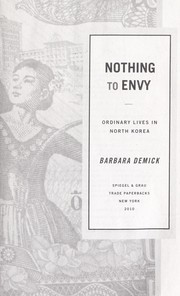
Books Like Nothing to Envy: Ordinary Lives in North Korea
by Barbara Demick
Nothing to Envy is defined by one clear method: granular, verifiable oral histories used to reconstruct ordinary lives under extraordinary state pressure. Barbara Demick builds the book from long interviews with six North Korean defectors, then threads their memories through archival details, border events and demographic facts so that famine, ration cards, surveillance and small domestic loyalties come into focus not as abstractions but as everyday decisions. The tone is sober and observational; the shocks arrive through specificity — a funeral, a market negotiation, a teacher’s small compromise — rather than rhetorical flourish.
Readers come to this book for different reasons: some for the reporting rigor that turns individual testimony into a broader social portrait; some for the intimate, personal narrative arcs of people who choose to leave everything; and some for the portrait of a society seen from inside rather than from a regime-focused headline. The nine recommendations below are grouped around those axes — memoirs and testimonies that match Demick’s close-listening, prison-and-defection narratives that echo the brutality she documents, and a few investigative accounts that explain the regime-level mechanics behind the human stories.
Recommended for fans of Nothing to Envy: Ordinary Lives in North Korea

The Girl with Seven Names
Hyeonseo Lee
Firsthand memoir of life in North Korea and escape, intimate and fast-paced.
Pick this if you want an intimate, single-person memoir of life inside North Korea and the process of escape; this matches Demick’s emphasis on lived detail but through one author’s voice.
Escape from Camp 14
Blaine Harden
Gripping survivor account of a brutal political prison and escape.
Pick this if you need a focused survivor account of a political prison and the mechanics of abuse — it’s grimmer and more narrowly centered on incarceration than Demick’s community portrait.
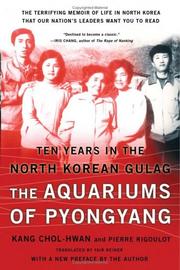
The Aquariums of Pyongyang
Kang Chol-hwan and Pierre Rigoulot
Childhood imprisonment in a North Korean gulag, vivid eyewitness testimony.
Pick this if you’re looking for vivid eyewitness testimony of being raised inside a North Korean labor camp; it parallels Demick’s use of personal memory but concentrates on childhood imprisonment.

In Order to Live
Yeonmi Park and Maryanne Vollers
Harsh, emotional escape story highlighting everyday survival and trauma.
Pick this if you want a raw, emotionally charged account of fleeing and the trauma of survival; it’s a personal memoir with a more confessional tenor than Demick’s restrained reporting.

Without You, There Is No Us
Suki Kim
Observational account by a teacher in Pyongyang revealing daily propaganda and control.
Pick this if you’d like an observational account from someone who worked inside the system and then taught there; it emphasizes daily propaganda and the lived experience of state control in ways that complement Demick’s chapters.
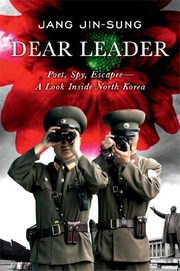
Dear Leader
Jang Jin-sung
Poet’s insider escape narrative exposing elite life and regime culture.
Pick this if you’re curious about the perspective of someone who served within the elite cultural apparatus and then defected; it illuminates regime culture from a higher social vantage point than Demick usually follows.

The Accusation
Bandi
Smuggled short stories offering bleak, intimate portraits of North Korean life.
Pick this if you want compact, fictionalized stories smuggled out of North Korea that give bleak, intimate portraits of ordinary life; this is a literary rather than journalistic form, so expect mood and parable over documentary detail.
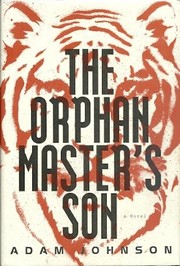
The Orphan Master's Son
Adam Johnson
Novelistic, haunting portrayal of identity and state brutality in North Korea.
Pick this if you’d like a literary, imaginative treatment of identity and state brutality; it captures many of the emotional truths Demick reports but does so as fiction rather than oral history.
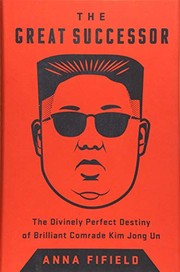
The Great Successor
Anna Fifield
Investigative biography explaining Kim Jong Un’s rise and regime mechanics.
Pick this if you want investigative context about leadership, succession and how policy decisions shape everyday life; this explains the structures behind the human stories Demick tells.
At a glance
These matches were chosen for how they reflect Demick’s core approaches: sustained first-person testimony, attention to quotidian detail under an authoritarian state, and reporting that connects individual lives to structural realities. Percentages reflect how many of those dimensions each title shares.
| Book | First published | Pages | Closest match on | Match |
|---|---|---|---|---|
The Girl with Seven Names Hyeonseo Lee | 2015 | 304 | Firsthand escape testimony | 95% |
Escape from Camp 14 Blaine Harden | 2012 | 256 | Brutal prison testimony | 92% |
The Aquariums of Pyongyang Kang Chol-hwan and Pierre Rigoulot | 2005 | 264 | Childhood gulag experience | 90% |
In Order to Live Yeonmi Park and Maryanne Vollers | 2015 | 304 | Emotional escape memoir | 89% |
Without You, There Is No Us Suki Kim | 2014 | 291 | Insider cultural perspective | 88% |
Dear Leader Jang Jin-sung | 2014 | 368 | Elite insider narrative | 86% |
The Accusation Bandi | 2017 | 256 | Smuggled literary snapshots | 84% |
The Orphan Master's Son Adam Johnson | 2012 | 496 | Novelistic exploration of identity | 82% |
The Great Successor Anna Fifield | 2019 | 336 | Regime-level biography | 80% |
About Nothing to Envy: Ordinary Lives in North Korea
Nothing to Envy was published in 2009 and grew out of Barbara Demick’s reporting for the Los Angeles Times. The book rests on extended interviews with six North Korean defectors and uses those testimonies alongside documentary research to depict everyday life during and after the 1990s famine.
Frequently asked questions
How is Nothing to Envy different from a memoir by a single defector?+
Demick’s book is a multi-subject oral history: instead of one life arc, she follows six people and compares their experiences across places and time. That allows her to generalize patterns while keeping the texture of personal memory.
Which of these books gives the closest account of escaping North Korea?+
For a firsthand escape narrative, The Girl with Seven Names and In Order to Live are closest — both are personal memoirs that focus on the act of fleeing and the difficulties of adjustment afterward.
Are there accounts of North Korean prison camps in this list?+
Yes. Escape from Camp 14 and The Aquariums of Pyongyang are survivor testimonies centered on incarceration; they cover conditions and institutional brutality more directly than Demick’s community-focused chapters.
Which picks explain how the regime actually operates at the top?+
The Great Successor is the investigative biography on this list that unpacks elite succession and state mechanics, offering context that complements Demick’s ground-level portraits.
Is any fiction included here?+
Yes. The Orphan Master's Son is a novel that captures the emotional logic and brutality of the regime in literary form; it reads like a thematic complement rather than direct reportage.
Want recommendations based on your own favorites?
BookTwin can match you to books by mood, pacing, themes, and emotional payoff — based on 1 to 5 books you tell it you loved.
Try BookTwin