Books Like Never Split the Difference
by Chris Voss
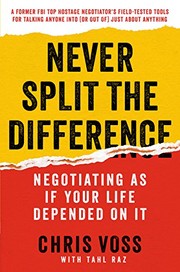
Never Split the Difference trains you to treat every negotiation as a human interaction full of emotions, information asymmetries and tactical possibilities. Chris Voss brings techniques developed during hostage negotiations — calibrated questions, tactical empathy, mirroring, labeling and the famous “black swan” concept — and reframes them for business deals, salary talks and everyday disputes. The book is organized around concrete, repeatable moves and short, illustrative case stories, so its value is both conceptual and immediately practical.
Readers come to Voss for different reasons: some want specific, scriptable tools they can use in a single meeting; others want the psychological rationale that explains why those tools work; and some appreciate the book as a mindset shift toward listening-first, human-centered bargaining. The nine picks below are chosen to reflect those distinct needs — foundational frameworks that complement Voss's tactics, deeper dives into persuasion and bias, and companion texts that teach how to prepare, recover from impasse, or improvise when plans break down.
Recommended for fans of Never Split the Difference
Getting to Yes
Roger Fisher, William Ury, Bruce Patton
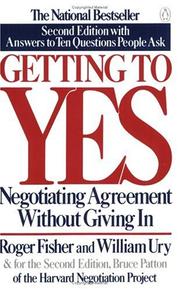
Foundational principled negotiation framework complementing Voss's tactics.
Pick this if you want a durable, interest‑based framework to pair with Voss’s tactical moves — Getting to Yes explains how to identify shared interests and craft win‑win options.
Getting Past No
William Ury
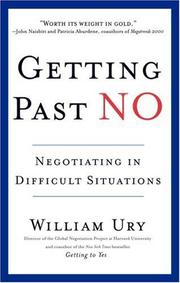
Practical techniques for breaking deadlocks and handling resistance.
Pick this if you need structured ways to manage resistance and deadlock; Getting Past No offers concrete steps for moving a stalled negotiation forward.
Influence
Robert B. Cialdini
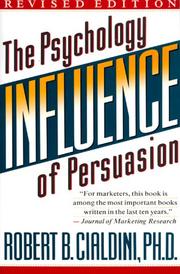
Classic psychology of persuasion that explains why people say yes.
Pick this if you want the research behind why people say yes; Influence explains the six principles that make many of Voss’s tactics predictable and repeatable.
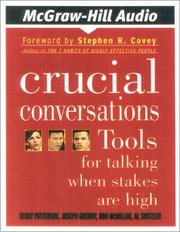
Crucial Conversations
Kerry Patterson, Joseph Grenny, Ron McMillan, Al Switzler
Tools for high-stakes, emotional conversations and achieving mutual purpose.
Pick this if you frequently face emotionally charged conversations; Crucial Conversations gives tools for preserving safety and mutual purpose under pressure.
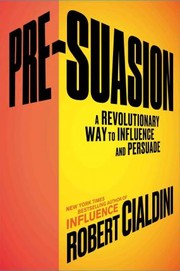
Pre-Suasion
Robert B. Cialdini
How to set the stage for influence before you make your pitch.
Pick this if you’re interested in priming and timing — Pre‑Suasion shows how to shape minds before you make requests, which complements Voss’s in‑moment scripts.
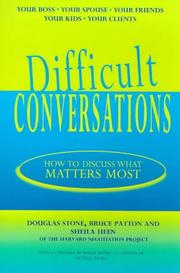
Difficult Conversations
Douglas Stone, Bruce Patton, Sheila Heen
Diagnoses why conversations derail and how to steer them productively.
Pick this if you want to understand why talks go off the rails; Difficult Conversations helps diagnose hidden assumptions and repair conversational breakdowns.
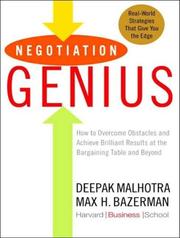
Negotiation Genius
Deepak Malhotra, Max H. Bazerman
Research-backed strategies and psychological insights for winning negotiations.
Pick this if you want game‑theory and behavioral-economics rigor alongside practical heuristics — Negotiation Genius provides the empirical support for many strategic choices.

The Art of Negotiation
Michael Wheeler
Flexible, improvisational negotiation approach that pairs well with Voss's methods.
Pick this if you liked Voss’s emphasis on adaptability; The Art of Negotiation teaches a flexible, situational approach to complement Voss’s specific scripts.

Thinking, Fast and Slow
Daniel Kahneman
Deep dive into cognitive biases that shape decision-making in negotiations.
Pick this if you want to understand the mental shortcuts that cause errors in judgment; Thinking, Fast and Slow lays out the biases that underlie many negotiation failures.
At a glance
Matches are based on which aspects of Voss’s book each title reinforces: tactical scripts and field techniques, principled frameworks for agreement, persuasion psychology, or negotiation mindset and improvisation.
| Book | First published | Pages | Closest match on | Match |
|---|---|---|---|---|
Getting to Yes Roger Fisher, William Ury, Bruce Patton | 1981 | 200 | Principled bargaining framework | 92% |
Getting Past No William Ury | 1991 | 161 | Breaking impasse techniques | 87% |
Influence Robert B. Cialdini | 1983 | 287 | Psychology of compliance | 85% |
Crucial Conversations Kerry Patterson, Joseph Grenny, Ron McMillan, Al Switzler | 2001 | 272 | Managing emotional stakes | 84% |
Pre-Suasion Robert B. Cialdini | 2016 | 432 | Setting the influence context | 83% |
Difficult Conversations Douglas Stone, Bruce Patton, Sheila Heen | 1999 | 250 | Diagnostic conversation skills | 82% |
Negotiation Genius Deepak Malhotra, Max H. Bazerman | 2007 | — | Research-backed strategy | 80% |
The Art of Negotiation Michael Wheeler | 2013 | 320 | Improvisational negotiating | 78% |
Thinking, Fast and Slow Daniel Kahneman | 2011 | 528 | Cognitive-bias deep dive | 76% |
About Never Split the Difference
Never Split the Difference was published in 2016 and draws on Chris Voss’s 24 years as an FBI hostage negotiator. The book popularized tactical empathy and several labeled techniques for nonviolent bargaining, and it has been widely cited in business, sales and self-help circles.
Frequently asked questions
What should I read after Never Split the Difference?+
If you want a complementary, theory-first framework, start with Getting to Yes. For more psychological explanation of influence, pick Influence or Pre‑Suasion.
Is Never Split the Difference tactical or theoretical?+
It's primarily tactical — short chapters filled with specific moves — but Voss ties those moves to psychological principles. For deeper theoretical grounding, Getting to Yes or Negotiation Genius are good pairs.
Which book complements Voss on persuasion science?+
Influence and Pre‑Suasion by Robert Cialdini unpack the social-psychology mechanisms that make many of Voss’s techniques effective.
I struggle to handle angry or emotional counterparties — which pick helps most?+
Crucial Conversations and Difficult Conversations focus directly on managing emotions, de‑escalation and maintaining mutual purpose during high-stakes talks.
Does Voss’s approach work in principled, win‑win negotiations?+
Yes, but it’s tactical. For a principled bargaining framework that emphasizes mutual gains, Getting to Yes pairs well with Voss’s tactics.
Want recommendations based on your own favorites?
BookTwin can match you to books by mood, pacing, themes, and emotional payoff — based on 1 to 5 books you tell it you loved.
Try BookTwin