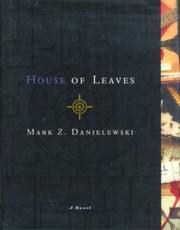
Books Like House of Leaves
by Mark Z. Danielewski
House of Leaves is built from nested documents, contradictory narrators and formal layout that forces the reader to experience the book's central uncanny space rather than just read about it. At its center is a blue house that is impossibly larger inside than out; Danielewski stages the physical bewilderment with footnotes, appendices, broken typography, and multiple framing voices (a documentary manuscript, an obsessive editor, and an unreliable first-person account) so the text itself becomes part of the horror.
Readers come to House of Leaves for very different reasons: some want the mind-bending structural tricks that make the book feel like a puzzle; others want the slow-burn domestic dread and claustrophobic architecture; others are after the book-as-art object, where page layout and typography are integral to meaning. The short notes below are chosen to reflect which of those components each recommendation shares with Danielewski’s novel, and to be explicit when a match is primarily tonal, formal, or thematic rather than plot-for-plot.
Recommended for fans of House of Leaves
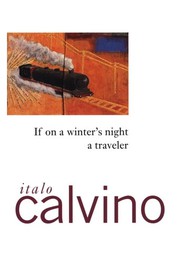
If on a winter's night a traveler
Italo Calvino
Playful, recursive metafiction that fractures narrative and reader expectation.
Pick this if you loved House of Leaves’ folding-in of reader and text — this book actively breaks and reassembles narrative expectations in a playful, self-aware way.
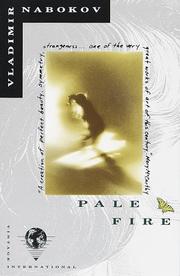
Pale Fire
Vladimir Nabokov
Unreliable commentary and layered text creating disturbing, ambiguous meanings.
Pick this if you were most fascinated by footnotes and marginal voices that create competing readings; here, the commentary itself generates disturbing, ambiguous meaning.
S.
J. J. Abrams and Doug Dorst
Book-within-book, marginalia and mystery evoke the tactile, layered reading experience.
Pick this if you want the physical-book experience — marginalia, inserts and a book-within-a-book that make the act of reading into part of the puzzle.
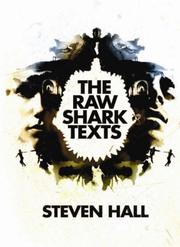
The Raw Shark Texts
Steven Hall
Conceptual horror and typographical play with identity and pursuit.
Pick this if the parts of House of Leaves that thrilled you were typographic tricks and conceptual horror — this one weaponizes language and format to unsettle identity and pursuit.

Annihilation
Jeff VanderMeer
Creeping, ecological weirdness and unreliable narrator exploring an impossible landscape.
Pick this if it was the creeping, landscape-based uncanny that gripped you; expect slow disorientation and an unreliable narrator confronting a place that resists explanation.

Only Revolutions
Mark Z. Danielewski
Experimental form and typographic daring from the same visionary voice.
Pick this if you want more work from Danielewski’s own playbook — Only Revolutions offers formal risk and typographic invention, though it’s more lyric and less explicitly horrific.
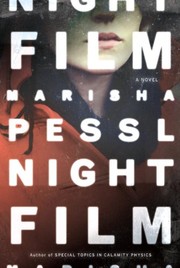
Night Film
Marisha Pessl
Investigative obsession into a disturbing cult of personality and filmic myth.
Pick this if you were drawn to the book’s investigatory frame and the way obsession unfurls; this is a contemporary thriller about media, myth and a single-minded dig into a disturbing subject.
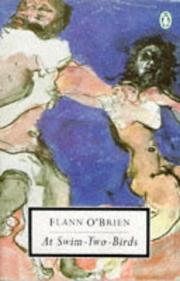
At Swim-Two-Birds
Flann O'Brien
Layered narratives collapse into each other with comic yet unsettling results.
Pick this if you appreciated House of Leaves’ collapsing layers of story into each other; this is an earlier, comic yet unsettling example where narratives intrude and rewrite one another.

The City & The City
China Miéville
Urban strangeness and investigative tension exploring perception and divided reality.
Pick this if you liked the novel’s exploration of perception and urban/architectural strangeness; expect an investigative spine that treats divided reality as a political and perceptual problem.
At a glance
Matches were chosen across three axes that matter for House of Leaves: formal/typographic daring, layered/unreliable narration, and uncanny/liminal spaces. Percentages reflect how many of those aspects each book shares, not overall plot similarity.
| Book | First published | Pages | Closest match on | Match |
|---|---|---|---|---|
If on a winter's night a traveler Italo Calvino | 1982 | 260 | Metafictional framing | 87% |
Pale Fire Vladimir Nabokov | 1945 | 315 | Unreliable commentary | 85% |
S. J. J. Abrams and Doug Dorst | 2000 | 352 | Tactile, layered mystery | 82% |
The Raw Shark Texts Steven Hall | 2007 | 448 | Conceptual/typographic play | 80% |
Annihilation Jeff VanderMeer | 2014 | 208 | Strange ecology & dread | 78% |
Only Revolutions Mark Z. Danielewski | 2006 | 384 | Authorial typographic daring | 76% |
Night Film Marisha Pessl | 2013 | 624 | Investigative obsession | 74% |
At Swim-Two-Birds Flann O'Brien | 1939 | 315 | Layered narrative collapse | 72% |
The City & The City China Miéville | 2009 | 384 | Perception & divided reality | 70% |
About House of Leaves
House of Leaves was first published in 2000 and quickly became a cult phenomenon for its unconventional structure and typographic experiments. The novel’s layered narrative — a documentary called The Navidson Record surrounded by footnotes and an editor-annotator’s voice — helped popularize ergodic fiction and influenced experimental writing and book design in the 21st century.
Frequently asked questions
What other books are like House of Leaves in structure and form?+
If you want formal play with narrative frames and a reader-facing puzzle, start with If on a winter's night a traveler or Pale Fire; both use nested, self-referential structures and unreliable commentary. For more of Danielewski’s formal experiments, Only Revolutions continues his typographic daring in another idiomatic project.
Which pick is best if I liked the unsettling, impossible architecture?+
The Raw Shark Texts and Annihilation both foreground environments that destabilize identity and reality: conceptual/psychic architecture in Raw Shark Texts, and ecological, uncanny landscape in Annihilation. Both echo House of Leaves’ sense of place as an active threat.
Are there any contemporary novels that recreate the tactile, layered reading experience?+
Yes. S. (by J. J. Abrams and Doug Dorst) deliberately replicates the physicality of reading with marginalia, inserts and a book-within-a-book mystery, making the act of handling the object central to the story — much as House of Leaves makes its typography and paratext essential.
Should I read Only Revolutions next?+
Only Revolutions shares Danielewski’s formal risk-taking and typographic inventiveness, but it’s a different project: lyric, cyclical and shorter on linear plot. Read it if you want more of his stylistic experiments rather than another haunted-house narrative.
Want recommendations based on your own favorites?
BookTwin can match you to books by mood, pacing, themes, and emotional payoff — based on 1 to 5 books you tell it you loved.
Try BookTwin