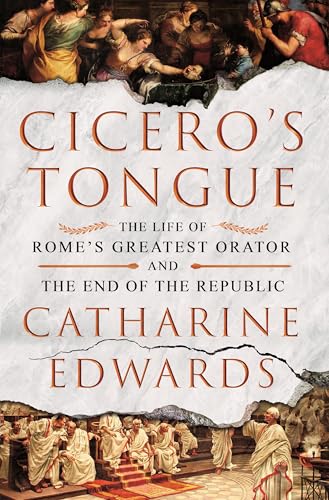
Books Like Cicero's Tongue
by Catharine Edwards
Cicero's Tongue is a focused scholarly narrative that frames Marcus Tullius Cicero’s life around two linked themes: the moral and political power of speech, and the fragility of republican institutions. Catharine Edwards traces his rise from provincial obscurity to consul, his conviction that oratory could defend a republic, and the fatal contradictions of a man who combined principled rhetoric with political compromise — culminating in the grotesque posthumous silencing when his tongue was pierced after his murder in 43 BCE.
Readers will come to this book for different, specific reasons: to understand Cicero as a thinker about law and speech; to read a tight biography that connects one life to the larger collapse of the Roman Republic; or to follow a narrative of late Republican politics told through personalities, factional violence and institutional breakdown. The recommendations below are chosen to match those precise interests — biographies of key figures, political narratives of the Republic’s end, and interpretive works that place rhetoric and ambition at the center of Rome’s transformation.
Recommended for fans of Cicero's Tongue
Cicero
Anthony Everitt
A vivid biography tracing Cicero’s political ascent, rhetorical genius, compromises, and fatal struggle for republican government.
Pick this if you want a close, book-length life of Cicero that covers his political achievements, oratory and compromises in similarly broad scope.
Rubicon
Tom Holland
A dramatic narrative of ambition, political violence, and institutional collapse during the Roman Republic’s final decades.
Pick this if you read Edwards for the story of Rome’s unraveling under competing ambitions and want a dramatic, chronology-driven account of those final decades.

The Storm Before the Storm
Mike Duncan
Explains how inequality, demagoguery, and broken norms prepared Rome for Cicero’s turbulent political world.
Pick this if you want a synthesis explaining how inequality, demagoguery and institutional breakdown made Cicero’s politics possible and precarious.

Mortal Republic
Edward J. Watts
Examines how Roman leaders dismantled republican restraints while claiming to defend tradition, stability, and public liberty.
Pick this if you are interested in how politicians rhetorically defended Republican values while dismantling restraints — a thematic echo of Edwards’ focus on rhetoric and principle.
Caesar
Adrian Goldsworthy
A balanced biography of Cicero’s formidable contemporary, combining military narrative with the politics that destroyed republican rule.
Pick this if you want a readable, balanced portrait of the military and political actor whose career reshaped the Republic’s power structures and directly affected Cicero’s era.

The Death of Caesar
Barry Strauss
Reconstructs Caesar’s assassination and its conspirators, revealing the desperation and miscalculations behind republican resistance.
Pick this if you want a detailed reconstruction of Caesar’s murder and its immediate political consequences, which illuminate the desperate politics that surround Cicero’s final years.
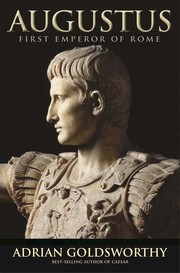
Augustus
Adrian Goldsworthy
Follows the calculating heir who exploited Rome’s civil wars and transformed a shattered republic into monarchy.
Pick this if you care about the arc from civil war to principate and want a biography of the man who ultimately consolidated power after the Republic’s collapse.
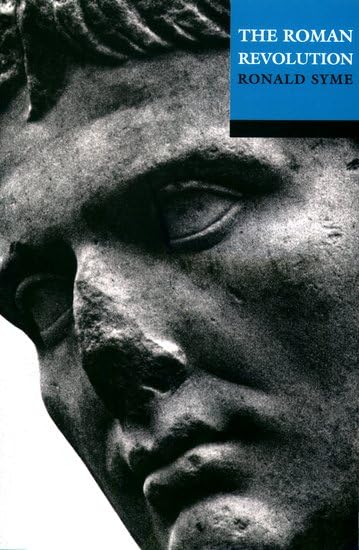
The Roman Revolution
Ronald Syme
A landmark political history portraying Rome’s transition from competitive republic to autocracy through patronage, propaganda, and force.
Pick this if you want a dense, influential scholarly argument about how patronage, propaganda and force produced Rome’s end — a more theoretical complement to Edwards’ biographical approach.
Dynasty
Tom Holland
Continues Rome’s story into the imperial age, emphasizing rhetoric, power, personality, and the consequences of republican collapse.
Pick this if you want a narrative that traces consequences beyond the Republic into the imperial age, emphasizing rhetoric, personality and institutional outcomes rather than a single biography.
At a glance
These matches were chosen for how they handle the same pillars as Edwards: biography and prosopography of leading Romans, close attention to rhetoric and political argument, and narrative accounts of the Republic’s collapse into civil violence and autocracy.
| Book | First published | Pages | Closest match on | Match |
|---|---|---|---|---|
Cicero Anthony Everitt | 2001 | 364 | Comprehensive Cicero life | 98% |
Rubicon Tom Holland | 2003 | 432 | Narrative political collapse | 96% |
The Storm Before the Storm Mike Duncan | 2017 | 327 | Causes of republican failure | 94% |
Mortal Republic Edward J. Watts | 2018 | 352 | Leaders undermining norms | 93% |
Caesar Adrian Goldsworthy | 2006 | 608 | Contemporary political rival | 91% |
The Death of Caesar Barry Strauss | 2015 | 323 | Assassination & aftermath | 89% |
Augustus Adrian Goldsworthy | 2014 | 598 | Transformation to monarchy | 88% |
The Roman Revolution Ronald Syme | 1952 | 580 | Canonical political interpretation | 87% |
Dynasty Tom Holland | 2015 | 512 | Continuing imperial story | 84% |
About Cicero's Tongue
Cicero's Tongue is a nonfiction biography by Birkbeck classicist Catharine Edwards, published in 2026 with the subtitle The Life of Rome's Greatest Orator and the End of the Republic. The book centers on Cicero’s career and his belief that speech could sustain republican government, and it foregrounds the brutality of his death in 43 BCE when his head was removed and his tongue pierced.
Frequently asked questions
How does Cicero's Tongue differ from other Cicero biographies?+
Edwards centers Cicero explicitly on rhetoric as a political technology and uses his murder (the mutilation of his head and tongue) as a framing device for the larger end of the Republic. For a more traditional, expansive life of Cicero, see Cicero by Anthony Everitt.
Which books explain the broader political collapse Edwards describes?+
Rubicon by Tom Holland and Mortal Republic by Edward J. Watts are both focused on the institutional stresses, factional violence and elite behavior that set the stage for Cicero’s world; Mortal Republic emphasizes the dynamics of leaders eroding republican restraints.
Are there readable biographies of Cicero’s contemporaries recommended here?+
Yes. Caesar by Adrian Goldsworthy is a balanced biography of the dominant military and political figure whose career reshaped Roman governance, and The Death of Caesar by Barry Strauss reconstructs the assassination that followed those transformations.
If I want a more theoretical or classic political history of the transition, which pick is best?+
The Roman Revolution by Ronald Syme is the canonical political interpretation of Rome’s shift to autocracy and analyses patronage and force in elite competition; it’s more interpretive and academic in tone than the narrative biographies.
Want recommendations based on your own favorites?
BookTwin can match you to books by mood, pacing, themes, and emotional payoff — based on 1 to 5 books you tell it you loved.
Try BookTwin