
Books Like Artificial Intimacy
by Sherry Turkle
Artificial Intimacy is structured as a sustained warning and life-course study: Sherry Turkle argues that human-like AI chatbots—used as companions, friends, therapists and lovers—are changing how people learn to trust, argue, grieve and take interpersonal risks. The book traces the pattern from early childhood attachments to the ways adults face loneliness and death, showing how relationships with machines can short-circuit the difficult, messy work that practicing real empathy and care require. Its defining qualities are evidence-grounded psychological observation, ethical urgency, and a through-line that treats conversational AI as a social technology with developmental consequences rather than merely a set of tools.
People will come to this book for different reasons: some want an expert account of how machine companions shape emotional skills; others are looking for guidance for parenting, clinical work, or institutional policy; and some readers will want to situate personal unease about chatbots in a broader social critique. The picks below separate those impulses — immediate practical responses, longer-form cultural analysis, attention-and-mental-resource critique, public-health perspectives on loneliness, and Turkle’s own earlier work — so you can choose by whether you’re after diagnosis, prescription, or historical context.
Recommended for fans of Artificial Intimacy

Alone Together
Sherry Turkle
Examines how digital companions promise connection while increasing isolation and diminishing the demands of human relationships.
Pick this if you want the direct intellectual predecessor: this is Turkle’s earlier, foundational diagnosis that digital companions promise connection but increase isolation.
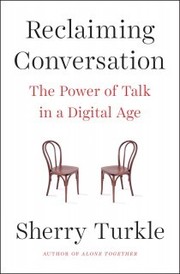
Reclaiming Conversation
Sherry Turkle
Argues that screen-mediated communication weakens empathy, attention, and our ability to sustain difficult face-to-face conversations.
Pick this if you want concrete, behavior-focused guidance for restoring attention and face-to-face conversation in families, schools, or workplaces.

The Anxious Generation
Jonathan Haidt
Connects childhood’s shift toward phones and social media with anxiety, isolation, and impaired social development.
Pick this if your primary concern is how phones and social platforms reshape childhood anxiety and social development; this links those developmental arguments to outcomes Turkle highlights.

The Shallows
Nicholas Carr
Explores how internet habits reshape attention, thought, and the mental capacities required for deep human engagement.
Pick this if you want a focused account of how internet use restructures attention and mental habits that underlie empathetic conversation.
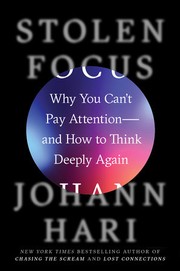
Stolen Focus
Johann Hari
Investigates how technology and social conditions fracture attention, undermining presence, reflection, and meaningful relationships.
Pick this if you’re interested in a journalistic investigation into how technology and social conditions fracture focus and presence, which complements Turkle’s social-psychological frame.
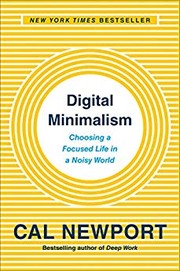
Digital Minimalism
Cal Newport
Offers a practical philosophy for reducing digital dependence and rebuilding intentional, rewarding offline relationships.
Pick this if you want a concrete philosophy and regimen for reducing digital dependence so people can rebuild intentional offline relationships.

Together
Vivek H. Murthy
Treats loneliness as a public-health crisis and explains why authentic relationships are essential throughout life.
Pick this if you want a policy- and health-oriented argument that treats loneliness as a societal problem requiring public solutions alongside individual habits.

The Lonely Century
Noreena Hertz
Examines the technological, economic, and social forces driving modern loneliness and weakening communal bonds.
Pick this if you want a social-science and economic account of the broader forces weakening communal bonds; this intersects with Turkle’s concerns about machines but is broader in scope.

The Good Life
Robert Waldinger and Marc Schulz
Uses decades of research to show that resilient human relationships—not frictionless substitutes—produce health and fulfillment.
Pick this if you’re looking for longitudinal, research-based evidence that close human relationships—rather than frictionless substitutes—produce health and fulfillment; it complements Turkle’s warnings by underscoring what is at stake.
At a glance
Matches were chosen for how directly they address Turkle’s core concerns: conversational AI and machine companions, the erosion of empathy and attention, the life-course framing of relationship skills, and practical responses (therapy, parenting, policy). Where a pick focuses on attention or public health rather than chatbots specifically, that is noted below.
| Book | First published | Pages | Closest match on | Match |
|---|---|---|---|---|
Alone Together Sherry Turkle | 2011 | 372 | Same core thesis | 98% |
Reclaiming Conversation Sherry Turkle | 2015 | 436 | Practical conversation advice | 96% |
The Anxious Generation Jonathan Haidt | 2024 | 395 | Childhood tech impacts | 91% |
The Shallows Nicholas Carr | 2010 | 290 | Attention & cognition | 87% |
Stolen Focus Johann Hari | 2022 | 352 | Attention fragmentation critique | 85% |
Digital Minimalism Cal Newport | 2019 | 295 | Practical reduction strategies | 83% |
Together Vivek H. Murthy | 2020 | 352 | Loneliness as health issue | 82% |
The Lonely Century Noreena Hertz | 2021 | — | Macro drivers of loneliness | 80% |
The Good Life Robert Waldinger and Marc Schulz | 2009 | 326 | Evidence on relationships’ benefits | 78% |
About Artificial Intimacy
Artificial Intimacy is a nonfiction book by MIT psychologist Sherry Turkle, published in September 2026, subtitled Who We Become When We Talk to Machines. Turkle is the author of Alone Together and has long written about how technology reshapes relating and selfhood.
Frequently asked questions
How does Artificial Intimacy relate to Turkle’s earlier book Alone Together?+
Artificial Intimacy builds on themes from Alone Together: both examine how digital technologies promise connection while reducing the pressures and practices that teach us to care for others. Artificial Intimacy updates that argument to focus specifically on human-like chatbots and follows the developmental arc from childhood to death.
Which books offer practical steps for parents and clinicians worried about conversational AI?+
Reclaiming Conversation is the most practical Turkle book here, arguing for habits that restore attention and face-to-face conversation; Digital Minimalism also offers a programmatic approach for reducing dependence on screen-mediated interactions.
I’m mainly concerned about attention and deep thinking—what should I read?+
The Shallows and Stolen Focus foreground how internet and platform-driven attention shifts affect thought and presence. These complement Turkle’s argument by showing the cognitive mechanisms that undermine the reflective capacities required for empathy.
I want a public-health perspective on loneliness alongside Turkle’s psychological lens—where should I look?+
Together by Vivek H. Murthy treats loneliness as a public-health issue and offers institutional-level prescriptions, while The Lonely Century examines societal drivers; both pair well with Turkle’s developmental focus.
Want recommendations based on your own favorites?
BookTwin can match you to books by mood, pacing, themes, and emotional payoff — based on 1 to 5 books you tell it you loved.
Try BookTwin