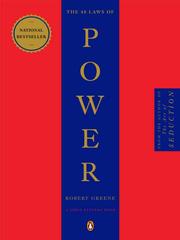
Books Like 48 Laws of Power
by Robert Greene
The 48 Laws of Power is built as a catalogue of maneuvers: forty-eight short, standalone “laws,” each illustrated with historical anecdotes, vivid case studies and blunt, prescriptive takeaways. Its voice is deliberately amoral and pragmatic — observe, manipulate, hide your intentions, control perception — and the structure encourages reading law-by-law rather than as a continuous narrative. The result is a manual-form book that treats power as an operational skill set you can study and apply.
If you liked 48 Laws, ask yourself which element hooked you: the distilled, checklist-style lessons; the amoral stare at how influence actually works; the historical vignettes that turn leaders into cautionary examples; or the sense of a toolbox you can deploy immediately. The recommendations below are chosen to match those different impulses — from classical political theory and military strategy to Greene’s own books that expand the same territory — and each note tells you which facet of Greene’s method it emphasizes.
Recommended for fans of 48 Laws of Power

The Prince
Niccolò Machiavelli
Foundational handbook of political power, ruthless realpolitik and practical tactics.
Pick this if you want to see the intellectual ancestor of Greene’s approach: concise, pragmatic counsel for rulers and explicit, sometimes cold-eyed accounts of realpolitik.
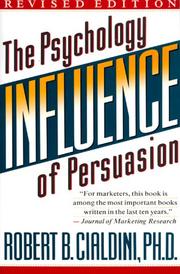
Influence
Robert B. Cialdini
Science of persuasion and compliance; explains techniques behind influence and manipulation.
Pick this if you want empirical, social‑science explanations for why influence techniques work — a more research-driven counterpart to Greene’s historical anecdotes.

The 33 Strategies of War
Robert Greene
Greene's strategic, historical guide to offensive and defensive social warfare.
Pick this if you liked Greene’s combative, tactical framing and want more of his voice applied specifically to offensive and defensive strategies of conflict.

The Art of War
Sun Tzu
Concise strategic principles applicable to conflict, competition and tactics in life.
Pick this if you appreciated Greene’s emphasis on strategy and want the classical sourcebook for maneuver, deception and planning in conflict situations.

The Laws of Human Nature
Robert Greene
Deep dive into human drives and biases that underlie power dynamics.
Pick this if you wanted deeper explanation of what drives people beneath the tactics — this book digs into personality, shadow impulses and cognitive drivers that make power moves work.

How to Win Friends and Influence People
Dale Carnegie
Classic practical tactics for social influence, relationship leverage, and interpersonal power.
Pick this if you’re after concrete, day-to-day methods for winning people over and managing relationships in social and business settings.

Power
Jeffrey Pfeffer
Modern organizational study of how people acquire, use, and keep power.
Pick this if you’re looking for a modern, workplace-focused treatment of acquiring and keeping power; it’s more business-and-research oriented than Greene’s historical essays.

The Art of Seduction
Robert Greene
Manual on psychological manipulation, charm tactics, and seductive strategies.
Pick this if you were drawn to the manipulative, seductive side of Greene’s toolkit and want a manual devoted entirely to charm, persona and emotional leverage.

Thinking, Fast and Slow
Daniel Kahneman
Explains cognitive biases that influence decision-making and manipulative tactics.
Pick this if you want a rigorous account of the mental shortcuts and biases that manipulators exploit; it’s a cognitive-science complement rather than a tactics manual.
At a glance
Matches are based on three dimensions that define Greene’s book: prescriptive, example-driven laws; a pragmatic/amoral stance toward influence; and tools you can apply in social or organizational settings. Each pick shares some of those elements to varying degrees.
| Book | First published | Pages | Closest match on | Match |
|---|---|---|---|---|
The Prince Niccolò Machiavelli | 1515 | 156 | Ruthless political tactics | 94% |
Influence Robert B. Cialdini | 1983 | 287 | Psychology of persuasion | 92% |
The 33 Strategies of War Robert Greene | 1998 | 496 | Organized strategic playbook | 91% |
The Art of War Sun Tzu | 1900 | 90 | Strategic, military thinking | 90% |
The Laws of Human Nature Robert Greene | 2018 | 609 | Human motives & bias | 89% |
How to Win Friends and Influence People Dale Carnegie | 1936 | 276 | Interpersonal influence tactics | 88% |
Power Jeffrey Pfeffer | 2011 | 273 | Power in organizations | 86% |
The Art of Seduction Robert Greene | 2001 | 468 | Charm-as-strategy focus | 85% |
Thinking, Fast and Slow Daniel Kahneman | 2011 | 528 | Cognitive bias insight | 83% |
About 48 Laws of Power
First published in 1998, The 48 Laws of Power established Robert Greene as a writer of modern manuals on strategy and influence. The book compiles historical examples from figures across eras to illustrate concise, often ruthless maxims about gaining and maintaining power.
Frequently asked questions
What should I read after The 48 Laws of Power?+
If you want more of Greene’s approach, The 33 Strategies of War and The Laws of Human Nature continue his mix of historical examples and prescriptive tactics. For a focused manual on social manipulation and charm, The Art of Seduction is Greene’s own deep dive into psychological technique.
Is The 48 Laws of Power ethical to use?+
The book presents techniques without prescribing moral judgment; some readers treat it as a descriptive catalog, others use it as a how‑to. If you want a more explicitly ethical or scientific perspective on influence, Influence (Robert B. Cialdini) frames persuasion with experimental findings rather than purely historical exemplars.
How is The 48 Laws of Power related to classical strategy texts?+
It synthesizes political and military maxims into modern social tactics. The Prince and The Art of War occupy the same tradition of blunt strategic counsel — Greene repurposes that lineage into compact, behavior-focused laws.
Which Robert Greene book explains power in organizations?+
The Laws of Human Nature gives more psychological grounding for why people behave the way they do, while The 33 Strategies of War translates combative strategy into social contexts — both are useful complements to The 48 Laws of Power.
Want recommendations based on your own favorites?
BookTwin can match you to books by mood, pacing, themes, and emotional payoff — based on 1 to 5 books you tell it you loved.
Try BookTwin