
Authors Like Senaa Ahmad
Senaa Ahmad writes historical figures the way a child plays with dolls — picking them up, breaking them, and standing them back on their feet to see what happens next. In The Age of Calamities, Henry VIII executes Anne Boleyn and she simply keeps coming back. Genghis Khan's riders turn into wolves. The Manhattan Project becomes a choose-your-own-adventure. The impossible is reported deadpan, the sentences turn ornate at exactly the strangest moment, and the whole thing is funny in a way that never softens what it is actually about: violence done to women, and the stories men tell to become the kind of people who can do it.
So "authors like Senaa Ahmad" splits several ways. Do you want the feminist retelling that guts an old story and rebuilds it? The literary short story that ignores the border between realism and the speculative? The metafiction that keeps showing you its own hands? Or simply more dead historical figures, reanimated and made to answer for themselves? The authors below are ranked by how closely they capture those qualities — starting with the writer critics reach for first when describing her, and ending at the mid-century source most of this tradition runs back to.
Authors to read if you love Senaa Ahmad

Carmen Maria Machado
95%Start with Her Body and Other Parties (2017)
The closest living comparison, and the name reviewers reach for first. Her Body and Other Parties runs on the same fuel: genre-agnostic stories about what happens to women's bodies, told with formal daring — one retells years of Law & Order: SVU episodes as ghost stories. Funny, furious, and structurally restless in exactly Ahmad's way.

Angela Carter
93%Start with The Bloody Chamber (1979)
The ancestor of this whole mode. The Bloody Chamber takes fairy tales apart and rebuilds them in gorgeous, overripe prose, with Bluebeard's murdered wives at its center — which is more or less what Ahmad does to Henry VIII's. If the Anne Boleyn story is why you are here, start with Carter.
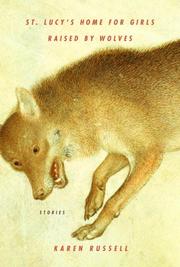
Karen Russell
90%Start with St. Lucy's Home for Girls Raised by Wolves (2006)
Named alongside Carter in Ahmad's own reviews. Russell writes lush, deadpan speculative stories that treat the preposterous as settled fact — girls raised by wolves being civilised by nuns, for one. The comic surface stretched over real menace is the same trick Ahmad pulls.

Kelly Link
88%Start with Get in Trouble (2015)
The presiding genius of stories that refuse to say which genre they are in — Ahmad's stated favourite territory. Get in Trouble is funny, eerie and structurally sly, and Link's blurb turns up on the covers of half the books on this page for good reason.
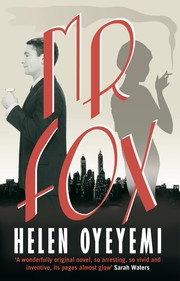
Helen Oyeyemi
86%Start with Mr. Fox (2011)
Mr. Fox is about a writer who keeps killing his heroines, and the muse who turns up to make him stop. That is Ahmad's central preoccupation — men narrating their own violence — handled with the same metafictional mischief and fairy-tale scaffolding.
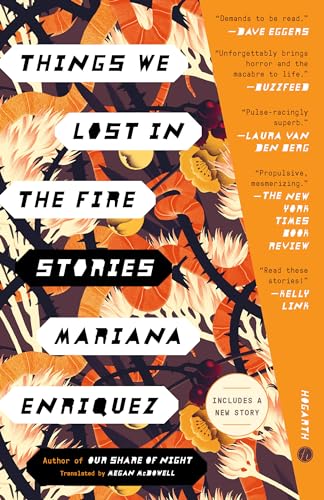
Mariana Enríquez
84%Start with Things We Lost in the Fire (2016)
For readers who want the horror turned up. Enríquez writes Argentine gothic where the violence is political and the women are the ones burning — in the title story they set themselves alight rather than wait for men to do it. Less absurdist than Ahmad, angrier, and just as unwilling to look away.

Julia Armfield
81%Start with salt slow (2019)
A debut collection about girls becoming sea creatures, bodies in revolt, and grief that takes physical form. Armfield shares Ahmad's instinct for the precise, beautiful sentence arriving in the middle of something grotesque — and for letting a metaphor simply come true.
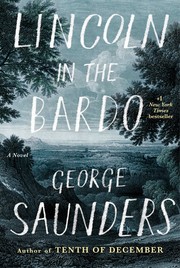
George Saunders
78%Start with Lincoln in the Bardo (2017)
For the historical half of Ahmad's project. Lincoln in the Bardo drops a real grieving president into a graveyard of squabbling ghosts and assembles the novel from fragments and citations — the same willingness to put a documented figure inside an absurd machine and play it completely straight.

Shirley Jackson
75%Start with The Lottery and Other Stories (1949)
Where the tradition starts. Jackson found the menace inside ordinary domestic life and delivered it with a dry comic calm that makes the cruelty land harder — the tonal ancestor of Ahmad's deadpan, and of every unsettling house that behaves like a character.
At a glance
The Ahmad signature is a specific combination — history handled irreverently, genre borders ignored, lush sentences dropped into absurd situations, and a steady, unblinking interest in violence against women and the men who remake themselves to commit it. So a 1979 book of rewritten fairy tales and a 2019 debut about girls turning into sea creatures can both belong here, for different reasons.
| Author | Start with | Best for | Match |
|---|---|---|---|
| Carmen Maria Machado | Her Body and Other Parties (2017) | Literary Speculative, Short Stories, Feminist | 95% |
| Angela Carter | The Bloody Chamber (1979) | Feminist Retellings, Short Stories, Gothic | 93% |
| Karen Russell | St. Lucy's Home for Girls Raised by Wolves (2006) | Literary Speculative, Short Stories, Magical Realism | 90% |
| Kelly Link | Get in Trouble (2015) | Literary Speculative, Short Stories, Fabulist | 88% |
| Helen Oyeyemi | Mr. Fox (2011) | Metafiction, Fairy Tale, Literary Fiction | 86% |
| Mariana Enríquez | Things We Lost in the Fire (2016) | Horror, Short Stories, Gothic | 84% |
| Julia Armfield | salt slow (2019) | Literary Speculative, Short Stories, Body Horror | 81% |
| George Saunders | Lincoln in the Bardo (2017) | Historical, Experimental, Literary Fiction | 78% |
| Shirley Jackson | The Lottery and Other Stories (1949) | Short Stories, Gothic, Classic | 75% |
About Senaa Ahmad
Senaa Ahmad is a Toronto-based writer whose short fiction has appeared in The Paris Review, McSweeney's, Best American Science Fiction and Fantasy, and Best Canadian Stories. Her work has received a Pushcart Prize and the Sunburst Award, and she has held the Carl Brandon Society's Octavia Butler Scholarship along with support from the Canada Council for the Arts, the Ontario Arts Council, and the Toronto Arts Council. The Age of Calamities (2026), her debut collection, is published by Macmillan in North America and Pushkin Press in the UK, and builds absurdist, speculative stories out of real historical catastrophe.
Frequently asked questions
Who should I read if I liked The Age of Calamities?+
Start with Carmen Maria Machado's Her Body and Other Parties — the closest match for Ahmad's mix of feminist rage, formal experiment and genre-blurring. Then Angela Carter's The Bloody Chamber for the rewritten-history impulse, and Kelly Link's Get in Trouble for the funny, uncategorisable strangeness.
Which author is most like Senaa Ahmad?+
Carmen Maria Machado. Both write short fiction that ignores the border between literary realism and the speculative, both are formally restless, and both keep returning to violence against women and the stories told to excuse it. Angela Carter and Karen Russell are the two names critics most often pair with Ahmad's.
Are there authors like Senaa Ahmad for readers who came for the history?+
Yes. George Saunders's Lincoln in the Bardo does what Ahmad does to Henry VIII and the Manhattan Project — takes a documented moment and runs it through an absurd, formally strange machine. Helen Oyeyemi's Mr. Fox is the pick if it was the metafictional layering that hooked you.
What makes Senaa Ahmad's stories distinctive?+
She treats historical catastrophe as raw material for absurdist comedy without ever making it weightless. Anne Boleyn refuses to stay executed, Genghis Khan's men turn into wolves, and the impossible is reported in a flat, matter-of-fact register — so the ornate sentences and the real horror underneath land all the harder.
Want matches based on your own favorites?
Tell BookTwin the books you loved and get recommendations matched by mood, pacing, themes, and emotional payoff.
Try BookTwin